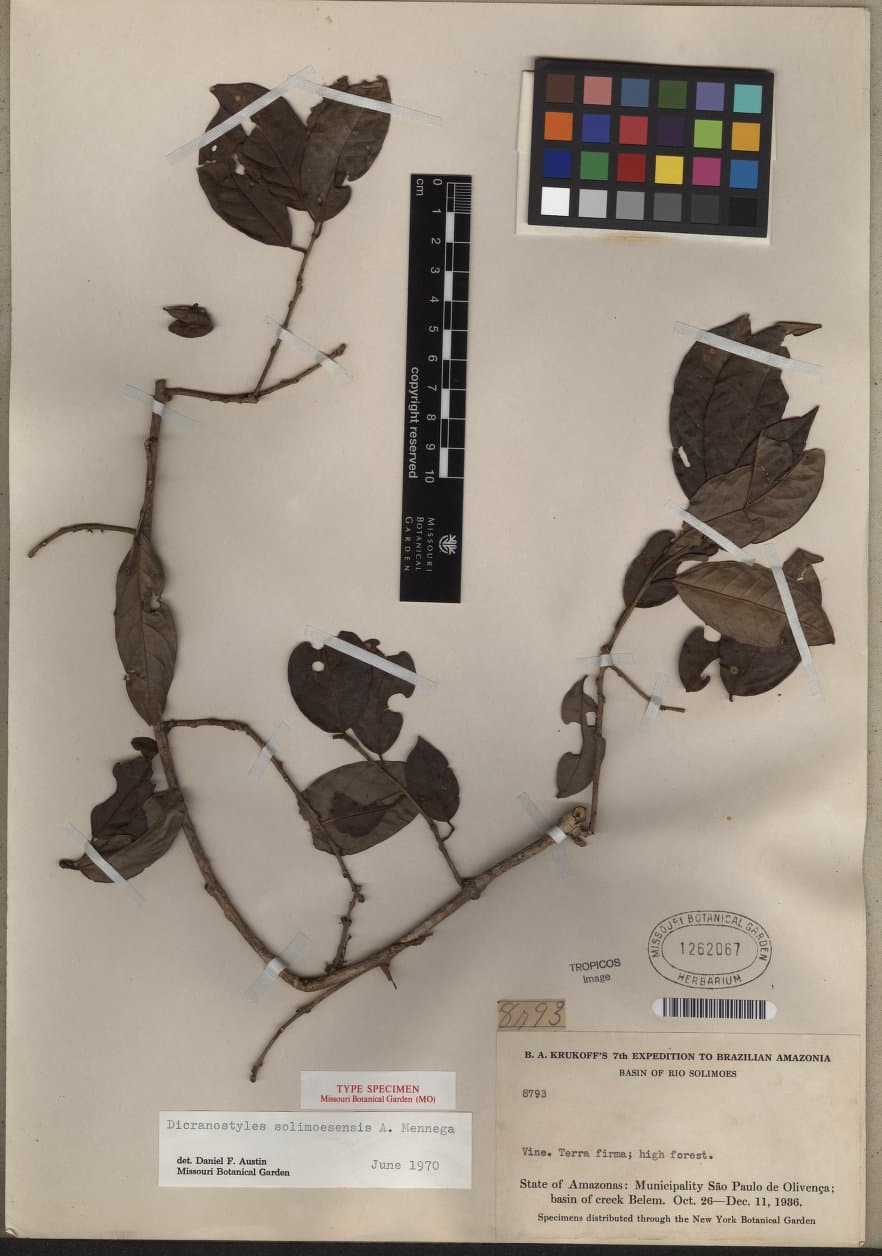
Cuscuta timorensis
Image: The New York Botanical Garden (cc-by)
NameCuscuta timorensis
Scientific NameCuscuta timorensis Decaisne ex Engelmann
Common NamesDodder, Love Vine, Strangleweed, Witch's Hair
Plant FamilyConvolvulaceae
Natural HabitatThis parasitic plant grows on various host plants in tropical and subtropical regions, specifically noted from Timor. It thrives in areas where it can readily attach to suitable hosts.
Parts Usedwhole_plant,seed
Medicinal Actionsadaptogen, anti-inflammatory, antioxidant
Traditional UsesTraditionally, the seeds (Semen Cuscutae) and whole plant are used in herbal medicine, particularly in Traditional Chinese Medicine, as a kidney tonic. It is employed to address conditions such as impotence, premature ejaculation, frequent urination, back pain, tinnitus, blurred vision, and chronic diarrhea. It is also believed to support liver health and improve vision.
Active ConstituentsFlavonoids, Lignans, Polysaccharides, Saponins, Coumarins
Preparation Methodsinfusion, decoction, tincture, powder
Contraindications & WarningsContraindicated in cases of yin deficiency with heat signs or severe constipation. Caution is advised during pregnancy and for individuals with known allergies to plants in the Convolvulaceae family.
Cultivation NotesAs an obligate parasitic plant, Cuscuta timorensis cannot be cultivated independently. It requires a suitable host plant to germinate and grow, attaching its stems to absorb nutrients. Propagation is primarily by seed.
Rarityuncommon
Description
Cuscuta timorensis is a parasitic vine characterized by its slender, yellowish to orange, leafless stems that twine around host plants. It lacks roots after germination, absorbing nutrients directly from its host via specialized haustoria. Its small, inconspicuous flowers develop into capsules containing seeds.