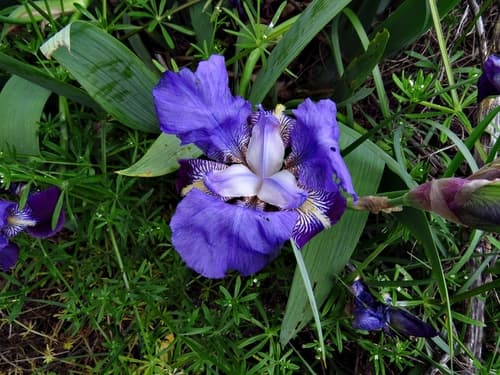
Orris Root
NameOrris Root
Scientific NameIris germanica
Common NamesOrris Root, Bearded Iris, German Iris, Sweet Iris
Plant FamilyIridaceae
Natural HabitatNative to Southern Europe and the Mediterranean region, Orris species thrive in well-drained, often rocky soils, meadows, and are widely cultivated in gardens.
Parts Usedroot
Medicinal Actionsdemulcent, expectorant, diuretic
Traditional UsesTraditionally, Orris Root has been used as an expectorant to relieve coughs and bronchitis, and as a demulcent to soothe irritated mucous membranes. It was also historically employed as a breath freshener, in tooth powders, and as a fixative in perfumes and potpourri due to its distinct violet-like fragrance.
Active Constituentsirone, triterpenoids, isoflavones, essential oils
Preparation Methodsinfusion, decoction, tincture, powder, essential oil
Contraindications & WarningsLarge doses of Orris Root can induce nausea or vomiting. It should be avoided during pregnancy and breastfeeding due to insufficient safety data. Topical application may cause skin irritation in sensitive individuals.
Cultivation NotesOrris species prefer full sun to partial shade and well-drained, neutral to slightly alkaline soil. Rhizomes should be planted shallowly, with part of the top exposed to the sun. Once established, the plants are relatively drought-tolerant.
Raritycommon
Description
Orris root is derived from the rhizomes of certain Iris species, primarily Iris germanica, a perennial herbaceous plant. It features large, showy flowers, typically purple or blue, with distinctive 'beards' on the lower petals. The plant grows from a thick, creeping rhizome, which is the part valued for its aromatic and medicinal properties.