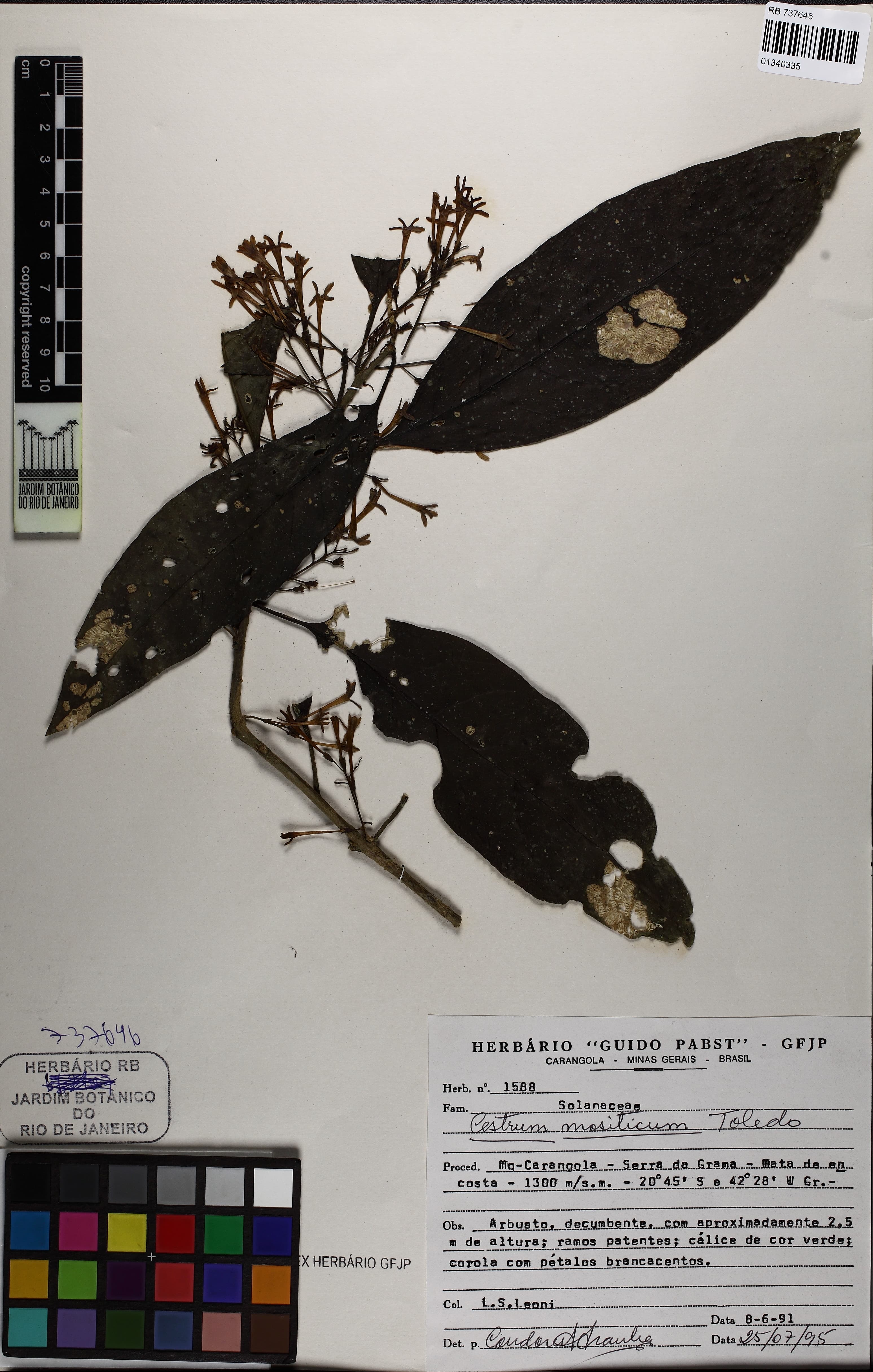
Cestrum mositicum
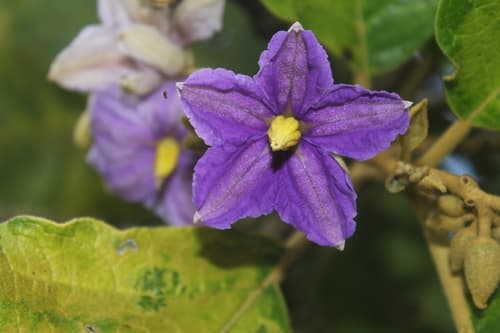
Image: L.S. Leoni (cc-by)
NameCestrum mositicum
Scientific NameCestrum mositicum Toledo
Common NamesDama da Noite, Jasmim-da-noite
Plant FamilySolanaceae
Natural HabitatNative to hillside forests in the Serra da Grama region of Carangola, Minas Gerais, Brazil, typically found at elevations around 1300 meters above sea level.
Parts Usedleaf,flower
Medicinal Actionsanalgesic, anti-inflammatory, sedative
Traditional UsesSpecific traditional medicinal uses for Cestrum mositicum are not widely documented. However, other species within the Cestrum genus are traditionally used for conditions such as fever, pain relief, and as topical applications for skin ailments, often with caution due to potential toxicity.
Active ConstituentsSteroidal saponins, Alkaloids, Flavonoids
Preparation Methodsinfusion, poultice, tincture
Contraindications & WarningsAll parts of Cestrum species are generally considered toxic, containing steroidal saponins and alkaloids that can cause gastrointestinal upset, neurological symptoms, and cardiac issues. Internal use is highly discouraged without expert guidance. Pregnant or breastfeeding women, children, and individuals with liver or kidney conditions should avoid use.
Cultivation NotesPrefers well-drained soil and full sun to partial shade. Thrives in warm, humid climates, typical of its native Brazilian habitat. Can be propagated from seeds or cuttings.
Rarityuncommon
Description
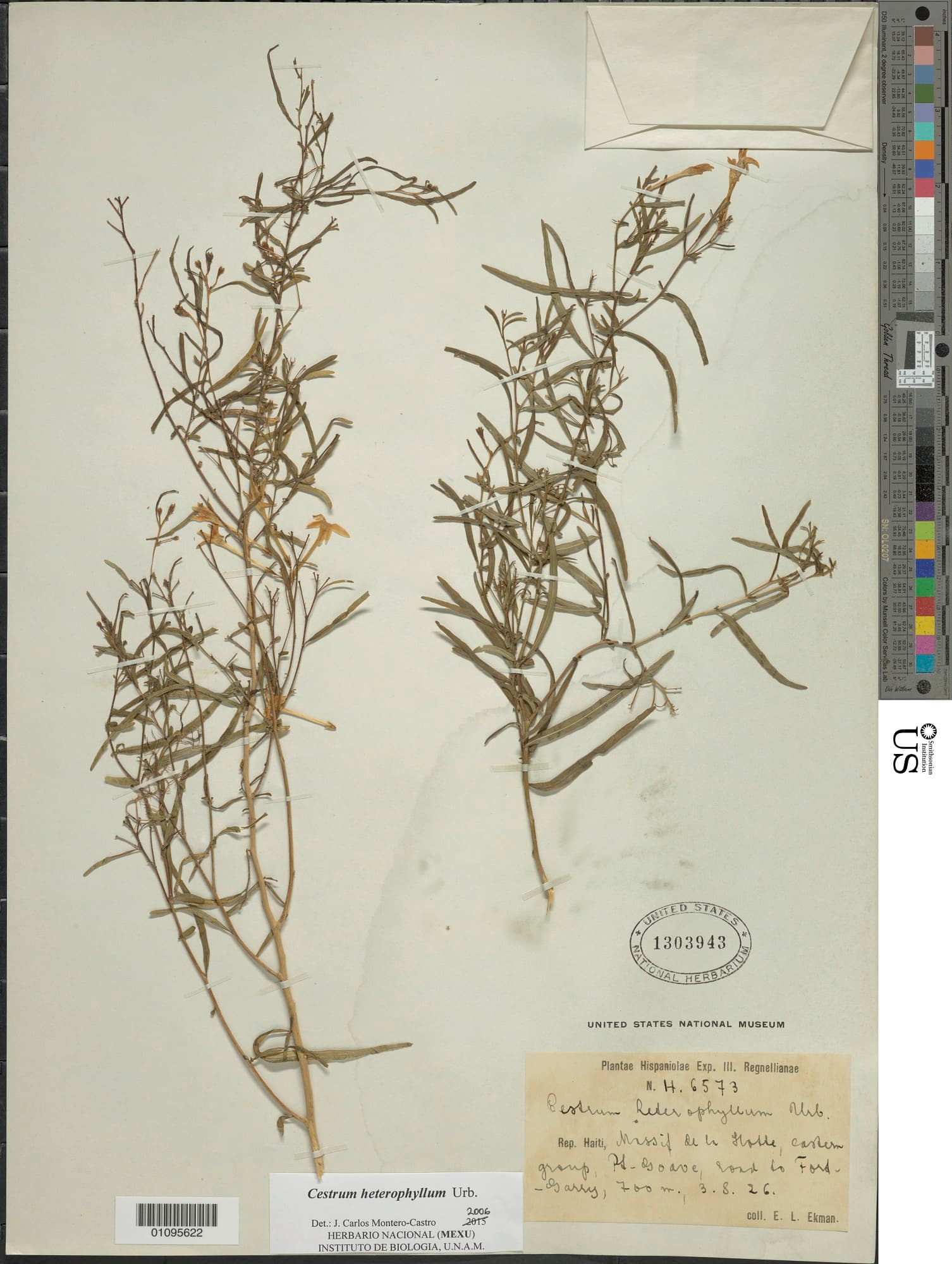
Cestrum mositicum is a decumbent shrub, growing approximately 2.5 meters tall with spreading branches. It features a green calyx and a corolla with whitish petals.