Ornamental Tobacco
NameOrnamental Tobacco
Scientific NameNicotiana alata
Common NamesFlowering Tobacco, Jasmine Tobacco, Winged Tobacco
Plant FamilySolanaceae
Natural HabitatNative to South America, particularly Brazil, Argentina, Paraguay, and Uruguay. It is widely cultivated globally as an ornamental garden plant and can sometimes naturalize in disturbed areas.
Parts Usedleaf
Medicinal Actionsanalgesic, sedative
Traditional UsesHistorically, various Nicotiana species, including ornamental types, have been used by indigenous cultures for ritualistic purposes, as a stimulant, and as a potent narcotic. Traditional medicinal applications, often external or in highly controlled small doses, included use as an analgesic for pain relief, a sedative, and for treating skin conditions or insect bites. Due to extreme toxicity, internal use is highly dangerous and not recommended in modern herbalism.
Active ConstituentsNicotine, Nornicotine, Anabasine
Preparation Methodsinfusion, tincture, poultice, powder
Contraindications & WarningsOrnamental tobacco, like all Nicotiana species, is highly toxic due to its alkaloid content, especially nicotine. It should never be ingested. Contraindicated in pregnancy, lactation, children, individuals with heart conditions, high blood pressure, or neurological disorders. Can interact dangerously with numerous medications. Topical use should be approached with extreme caution due to skin absorption and potential for systemic toxicity.
Cultivation NotesThis plant thrives in full sun to partial shade and prefers rich, well-drained soil. It is typically grown as an annual in temperate climates, requiring moderate watering. Deadheading spent flowers can encourage more blooms.
Raritycommon
Description
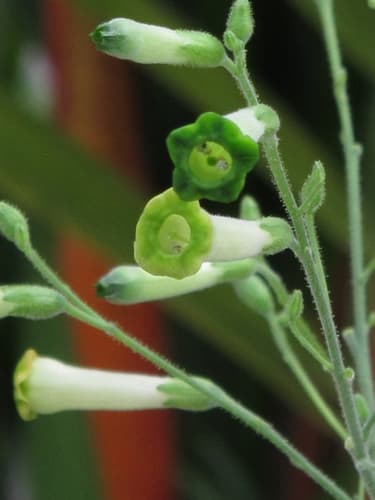
Ornamental tobacco is an herbaceous annual or tender perennial plant, typically grown for its attractive and often fragrant flowers. The plant produces tall stalks bearing numerous tubular flowers, which can be white, green, or various shades of pink and red, opening primarily in the evening.