Opium poppy
Image: Alvesgaspar (CC BY-SA 3.0)
NameOpium poppy
Scientific NamePapaver somniferum
Common NamesOpium poppy, Breadseed poppy, Garden poppy
Plant FamilyPapaveraceae
Natural HabitatNative to the eastern Mediterranean and Asia Minor, it is now widely cultivated in temperate regions globally. It thrives in full sun and well-drained soil, often found in agricultural fields or disturbed areas.
Parts Usedfruit,seed
Medicinal Actionsanalgesic, sedative
Traditional UsesHistorically, the latex extracted from the unripe fruit (seed pod) was the source of opium, traditionally used for potent pain relief, inducing sleep, and treating severe coughs and diarrhea. The seeds, however, are non-narcotic and have been used culinarily and for their oil.
Active ConstituentsMorphine, Codeine, Thebaine, Papaverine, Noscapine
Preparation Methodstincture, powder
Contraindications & WarningsThe cultivation and use of opium poppy for its narcotic properties are illegal in many countries due to its high potential for addiction and severe side effects, including respiratory depression, nausea, constipation, and withdrawal symptoms. It should not be used by pregnant or nursing women, or individuals with respiratory conditions. Poppy seeds are generally safe for consumption but may contain trace amounts of alkaloids.
Cultivation NotesPrefers full sun exposure and fertile, well-drained soil. Seeds are typically sown directly into the ground in early spring in cooler climates. Requires consistent moisture during germination and early growth.
Raritycommon
Description
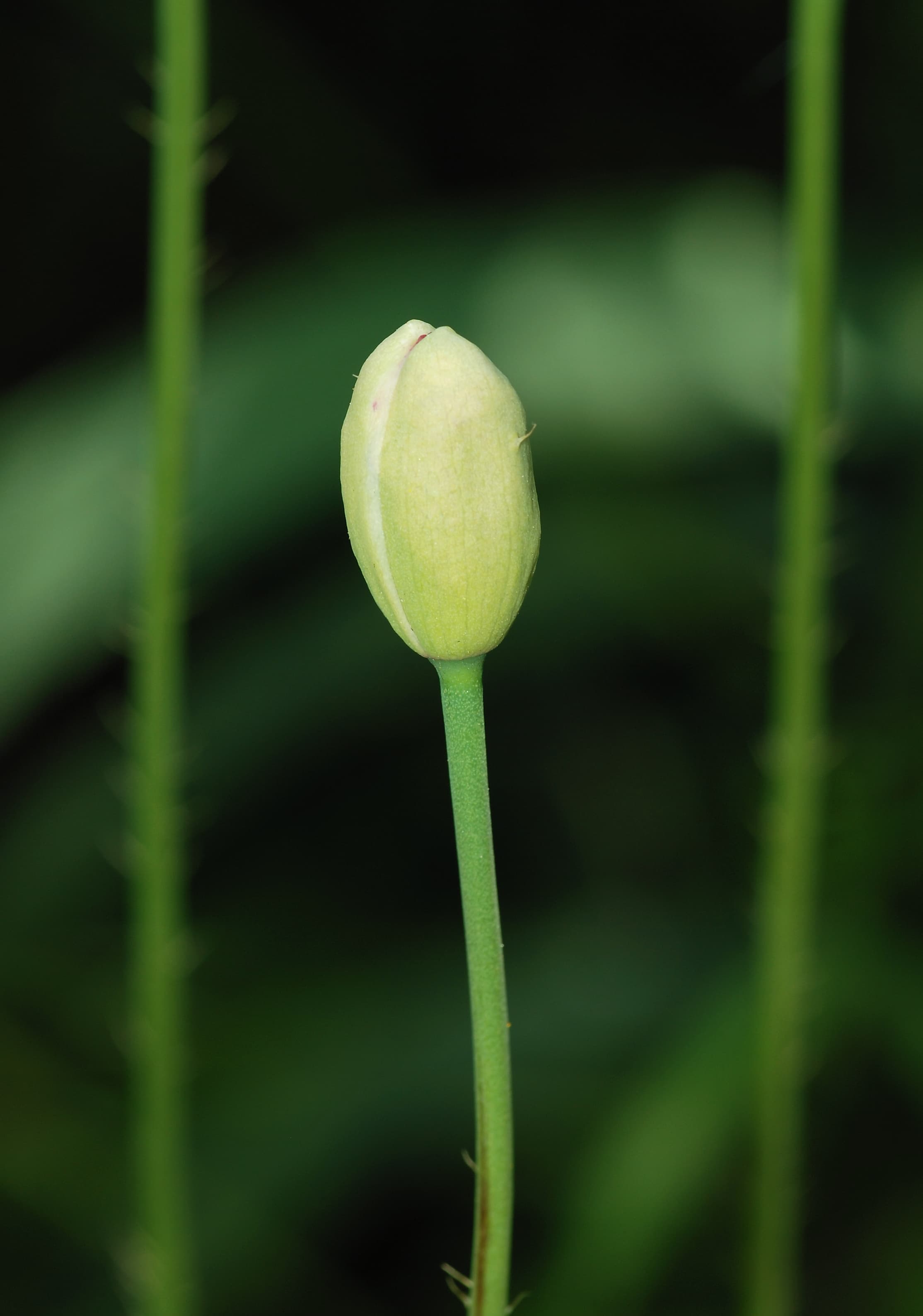
A herbaceous annual plant characterized by its large, often showy flowers and distinctive globular seed pods. The image displays a pale green, ovoid bud, typical of the plant's early development before the petals emerge.