Opium poppy
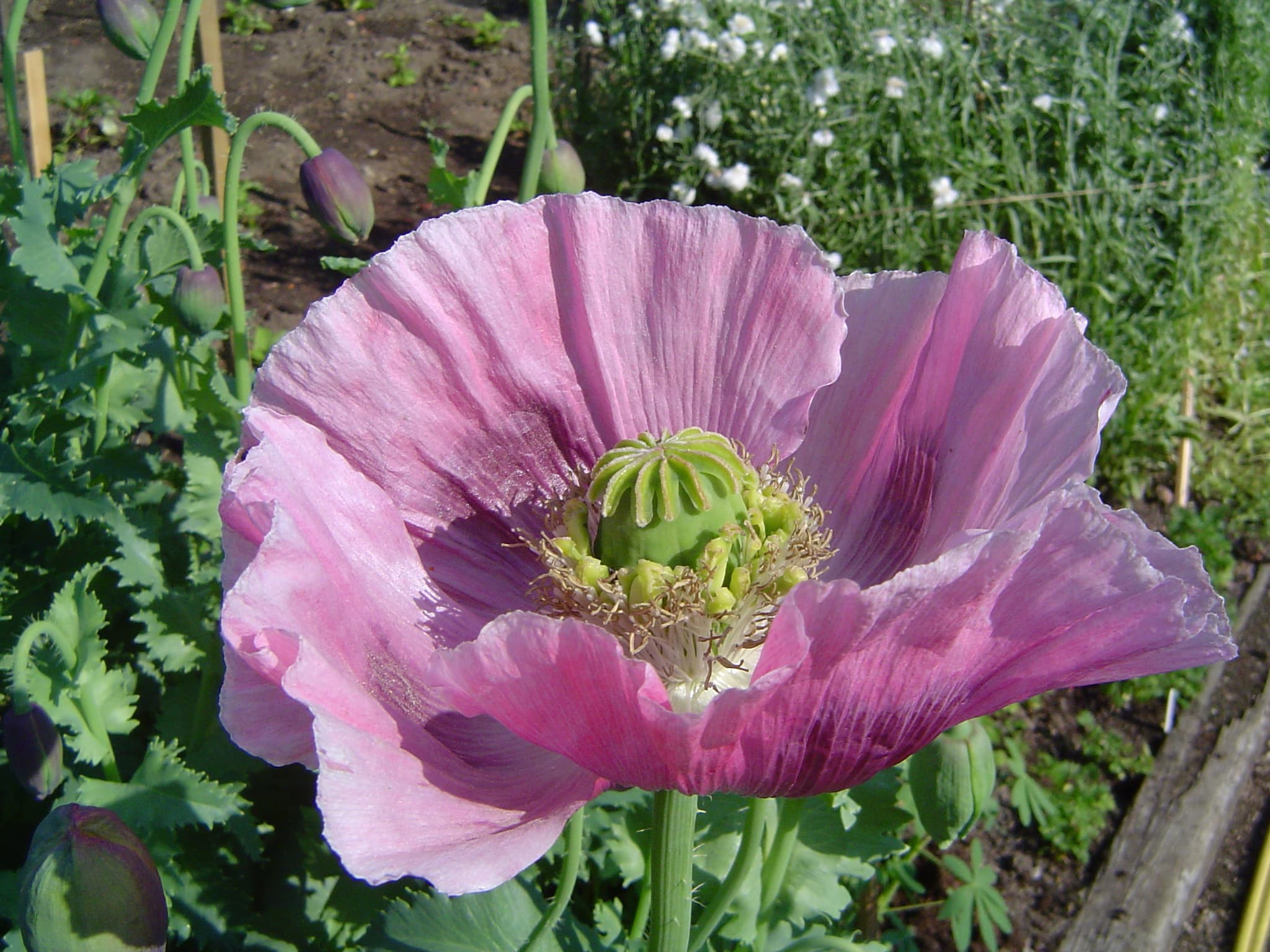
Image: Louise Joly, one half of AtelierJoly (CC BY-SA 1.0)
NameOpium poppy
Scientific NamePapaver somniferum
Common NamesOpium poppy, Breadseed poppy, Garden poppy
Plant FamilyPapaveraceae
Natural HabitatNative to the eastern Mediterranean and Asia Minor, it is now widely cultivated globally and can be found as a naturalized escapee in disturbed soils, fields, and gardens in temperate regions.
Parts Usedfruit,seed
Medicinal Actionsanalgesic, sedative
Traditional UsesHistorically, the latex from the unripe seed capsules was collected to produce opium, which was used as a powerful pain reliever, sedative, and cough suppressant. It was traditionally employed to treat severe pain, insomnia, and diarrhea. Poppy seeds, however, are used culinarily and are non-narcotic.
Active ConstituentsMorphine, Codeine, Thebaine, Papaverine, Noscapine
Preparation Methodstincture, powder
Contraindications & WarningsHighly addictive and illegal for personal cultivation and use in many countries due to its potent narcotic alkaloids. Can cause severe respiratory depression, constipation, nausea, and overdose. Dangerous interactions with other central nervous system depressants. Not for use by pregnant or nursing women, or individuals with respiratory conditions.
Cultivation NotesPrefers full sun and well-drained soil. Can be sown directly in early spring or autumn. Requires moderate watering and is generally low-maintenance once established. Cultivation for opium production is illegal in most countries.
Raritycommon
Description
An annual herbaceous plant growing up to 1.5 meters tall, characterized by large, showy flowers, typically pink, purple, or white, with a prominent central seed capsule. Its glaucous green leaves are lobed or toothed, and the plant produces a milky latex when cut.