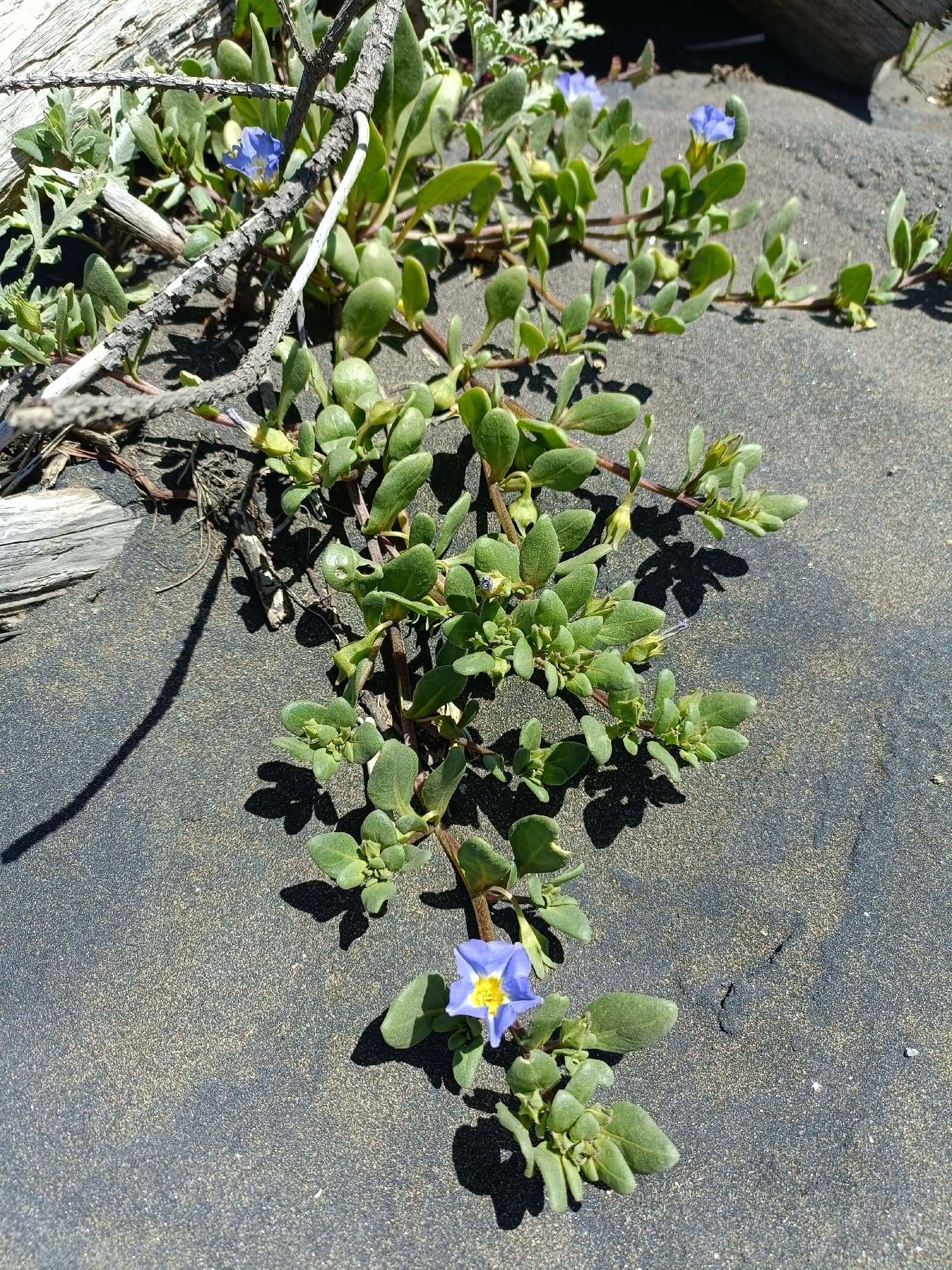
Nolana samaensis
Image: David (cc-by-nc)
NameNolana samaensis
Scientific NameNolana samaensis
Common NamesChilean Bellflower, Nolana
Plant FamilySolanaceae
Natural HabitatNative to coastal dunes, sandy beaches, and arid coastal regions of Peru and Chile, thriving in saline and nutrient-poor soils. It is often found growing in association with other coastal vegetation.
Parts Usedwhole_plant
Medicinal Actionssedative
Traditional UsesTraditional medicinal uses for Nolana samaensis are not well-documented. While some Nolana species are known to contain tropane alkaloids which can have potent pharmacological effects, including sedative properties at very low doses, these compounds are generally considered toxic and are not safely used in traditional herbal medicine due to a narrow therapeutic window and high risk of adverse effects.
Active ConstituentsTropane alkaloids, Flavonoids
Preparation Methodspowder
Contraindications & WarningsDue to the presence of potentially toxic tropane alkaloids, Nolana samaensis is considered unsafe for internal consumption. Ingestion can lead to anticholinergic poisoning symptoms such as dry mouth, blurred vision, dilated pupils, rapid heart rate, delirium, and hallucinations. Avoid all medicinal use.
Cultivation NotesPrefers full sun and very well-drained, sandy soil. It is drought-tolerant once established and can tolerate saline conditions, making it suitable for coastal gardens or xeriscaping. Often grown as an ornamental annual in temperate climates.
Rarityuncommon
Description
A low-growing, sprawling annual or perennial herb forming mats, characterized by succulent, spatulate leaves and showy, funnel-shaped flowers, typically blue-purple with a yellow throat and a yellow center. It is adapted to arid coastal environments.