Nicotiana otophora
NameNicotiana otophora
Scientific NameNicotiana otophora
Common NamesWild Tobacco, South American Tobacco
Plant FamilySolanaceae
Natural HabitatNative to South America, particularly regions like Bolivia, Argentina, and Paraguay. It thrives in disturbed areas, open woodlands, roadsides, and agricultural margins, preferring well-drained soils and full sun.
Parts Usedleaf,flower,whole_plant
Medicinal Actionsanalgesic, nervine
Traditional UsesTraditionally used by indigenous communities in South America, often for ritualistic purposes, as a psychoactive agent, or topically for pain relief. It may be smoked, chewed, or applied as a poultice. Due to its potent alkaloid content, internal use is highly toxic and dangerous.
Active ConstituentsNicotine, Anabasine, Nornicotine, Pyridine alkaloids
Preparation Methodspoultice, powder, infusion
Contraindications & WarningsEXTREME TOXICITY. Not safe for internal consumption due to high levels of nicotine and other toxic alkaloids. Highly addictive. Contraindicated in pregnancy, lactation, heart conditions, hypertension, gastrointestinal issues, and by individuals sensitive to nicotine. Can cause severe poisoning, nausea, vomiting, convulsions, and death.
Cultivation NotesPrefers full sun and well-drained soil. It is a relatively hardy plant in its native range, often growing in disturbed sites. Requires warm temperatures and can be grown from seed.
Raritycommon
Description
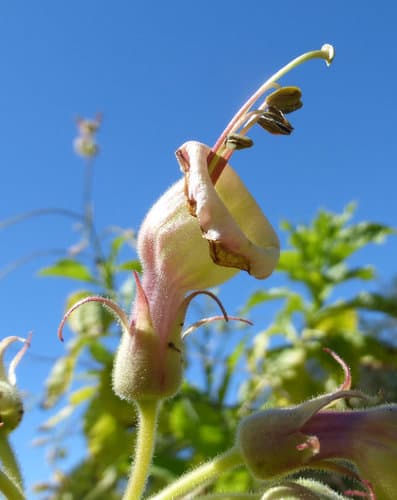
Nicotiana otophora is an herbaceous plant characterized by its hairy stems and leaves. It produces elongated, tubular flowers, often pale yellowish-green to pinkish, with prominent stamens and a pistil extending beyond the corolla. The flowers typically open at night and are pollinated by moths.