Nicotiana linearis
NameNicotiana linearis
Scientific NameNicotiana linearis
Common NamesLinear-leaved Tobacco, Desert Tobacco, Wild Tobacco
Plant FamilySolanaceae
Natural HabitatNative to arid and semi-arid regions of the southwestern United States and northern Mexico, it thrives in sandy or gravelly soils, often found in disturbed areas, washes, and open desert scrub.
Parts Usedleaf,whole_plant
Medicinal Actionsanalgesic, sedative, antimicrobial
Traditional UsesTraditionally, various Nicotiana species, including wild tobaccos like N. linearis, were used by indigenous peoples for ceremonial smoking, as a stimulant, or topically for pain relief, insect bites, and skin ailments. Internal use was extremely cautious and often ritualistic due to high toxicity.
Active Constituentsnicotine, nornicotine, anabasine
Preparation Methodsinfusion, powder, poultice
Contraindications & WarningsEXTREMELY TOXIC. All parts of Nicotiana linearis are poisonous due to high alkaloid content, primarily nicotine. Internal use is highly dangerous and can cause severe poisoning, including nausea, vomiting, dizziness, tremors, convulsions, respiratory paralysis, and death. Nicotine is highly addictive. Contraindicated in pregnancy, lactation, heart conditions, hypertension, gastrointestinal issues, and by anyone without expert guidance. Not recommended for internal use in modern herbalism.
Cultivation NotesPrefers full sun and well-drained, sandy or gravelly soils. It is drought-tolerant once established and can readily self-seed. Requires minimal care in suitable arid environments.
Raritycommon
Description
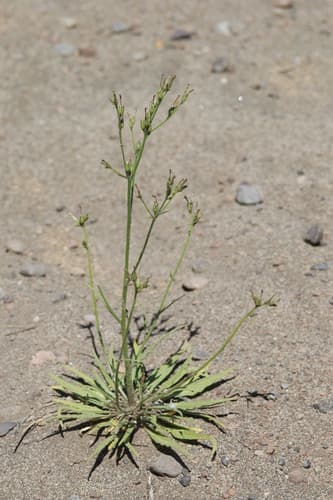
Nicotiana linearis is an annual or short-lived perennial herb characterized by a basal rosette of linear to spatulate leaves. It produces erect flowering stems bearing small, tubular, often greenish-white or yellowish flowers that develop into capsules containing numerous seeds.