Nicotiana candelabra
NameNicotiana candelabra
Scientific NameNicotiana candelabra
Common NamesCandelabra Tobacco, Wild Tobacco
Plant FamilySolanaceae
Natural HabitatNative to arid and semi-arid regions of Western Australia and the Northern Territory, often found on rocky hillsides, gorges, and disturbed areas with well-drained soils.
Parts Usedleaf,flower,whole_plant
Medicinal Actionsanalgesic, sedative
Traditional UsesIndigenous Australians traditionally used the leaves of Nicotiana species, including N. candelabra, as a stimulant by chewing them, often mixed with ash. They were also applied topically as a poultice for pain relief, boils, and various skin ailments.
Active Constituentsnicotine, anabasine, nornicotine
Preparation Methodspoultice, powder
Contraindications & WarningsHighly toxic and addictive. Not for internal consumption due to severe toxicity, including nausea, vomiting, dizziness, convulsions, and death. Avoid during pregnancy, breastfeeding, and in individuals with heart conditions, hypertension, or neurological disorders. External use should be with extreme caution due to skin absorption.
Cultivation NotesPrefers full sun and well-drained, often rocky or sandy soils. Drought-tolerant once established, making it suitable for arid garden landscapes. Can be grown from seed.
Raritycommon
Description
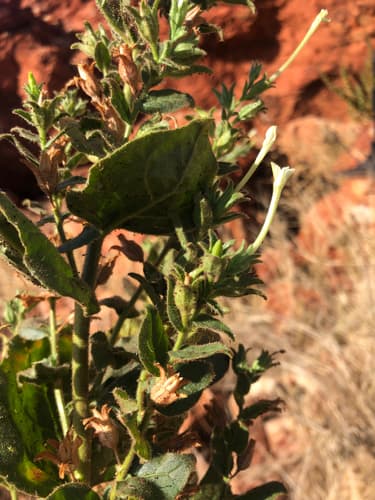
An erect, often sticky, perennial herb or shrub growing up to 2 meters tall, characterized by large, hairy, often glandular leaves and terminal clusters of long, tubular white flowers. The flowers are typically slender and trumpet-shaped, emerging from the upper leaf axils.