New Zealand Bindweed
NameNew Zealand Bindweed
Scientific NameCalystegia tuguriorum
Common NamesNew Zealand Bindweed, Pōhue, Coastal Bindweed
Plant FamilyConvolvulaceae
Natural HabitatFound in coastal areas, forest margins, scrubland, and disturbed sites throughout New Zealand, often thriving in open, sunny locations.
Parts Usedleaf,root
Medicinal Actionsdiuretic, anti-inflammatory
Traditional UsesTraditionally, Māori used parts of pōhue (New Zealand bindweed) as a strong purgative to cleanse the body. It was also applied externally as a poultice for skin ailments and wounds, and sometimes used as a general tonic.
Active ConstituentsResin glycosides, Convolvulin
Preparation Methodsdecoction, poultice
Contraindications & WarningsDue to its strong purgative action, it should be used with extreme caution. Not recommended for pregnant or breastfeeding individuals, young children, or those with gastrointestinal disorders, severe dehydration, or electrolyte imbalance.
Cultivation NotesA vigorous and fast-growing climber, it prefers full sun to partial shade and well-drained soil. It can be invasive, spreading rapidly by rhizomes and seeds, and may require management to prevent overgrowth.
Raritycommon
Description
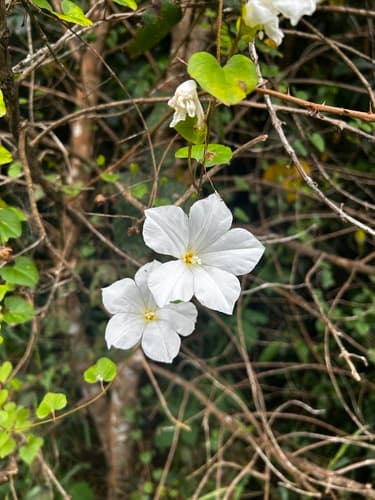
A native New Zealand perennial climbing vine, characterized by its heart-shaped to sagittate leaves and large, showy white, trumpet-shaped flowers. It vigorously twines around other vegetation, often forming dense mats.