Neem
NameNeem
Scientific NameAzadirachta indica
Common NamesNeem, Indian Lilac, Margosa Tree, Nimtree
Plant FamilyMeliaceae
Natural HabitatNative to tropical and subtropical regions, particularly the Indian subcontinent. It thrives in hot, dry climates and is often found in arid and semi-arid areas, tolerating poor, sandy, or stony soils.
Parts Usedleaf,flower,bark,seed,fruit
Medicinal Actionsanalgesic, anti-inflammatory, antimicrobial, antioxidant, astringent
Traditional UsesNeem has been a cornerstone of Ayurvedic medicine for centuries, used to treat a wide array of ailments. Traditionally, it is employed for skin conditions like acne, eczema, and psoriasis, as well as for fever, infections, and dental hygiene. It is also used internally for digestive issues, blood purification, and as an insect repellent.
Active ConstituentsAzadirachtin, nimbin, nimbidin, nimbolide, quercetin, salannin, meliacins
Preparation Methodsinfusion, decoction, tincture, powder, salve, essential oil
Contraindications & WarningsPregnant or breastfeeding women should avoid Neem due to potential abortifacient effects and lack of safety data. It may interact with certain medications, including diabetes drugs and immunosuppressants. Internal use of Neem oil, especially in high doses, can be toxic and is not recommended for infants or young children.
Cultivation NotesNeem trees prefer full sun and well-drained soil, thriving in hot, dry climates. They are highly drought-tolerant once established and can grow in poor soil conditions. Propagation is typically from seeds or cuttings.
Raritycommon
Description
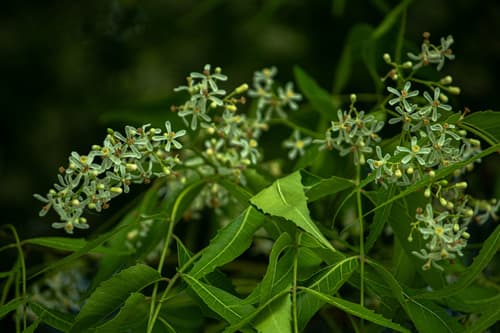
Neem is a fast-growing evergreen tree native to the Indian subcontinent, characterized by its broad, pinnate leaves and clusters of small, fragrant white flowers. It produces small, olive-like fruits. All parts of the tree, especially the leaves, bark, and seeds, are highly valued for their medicinal properties.