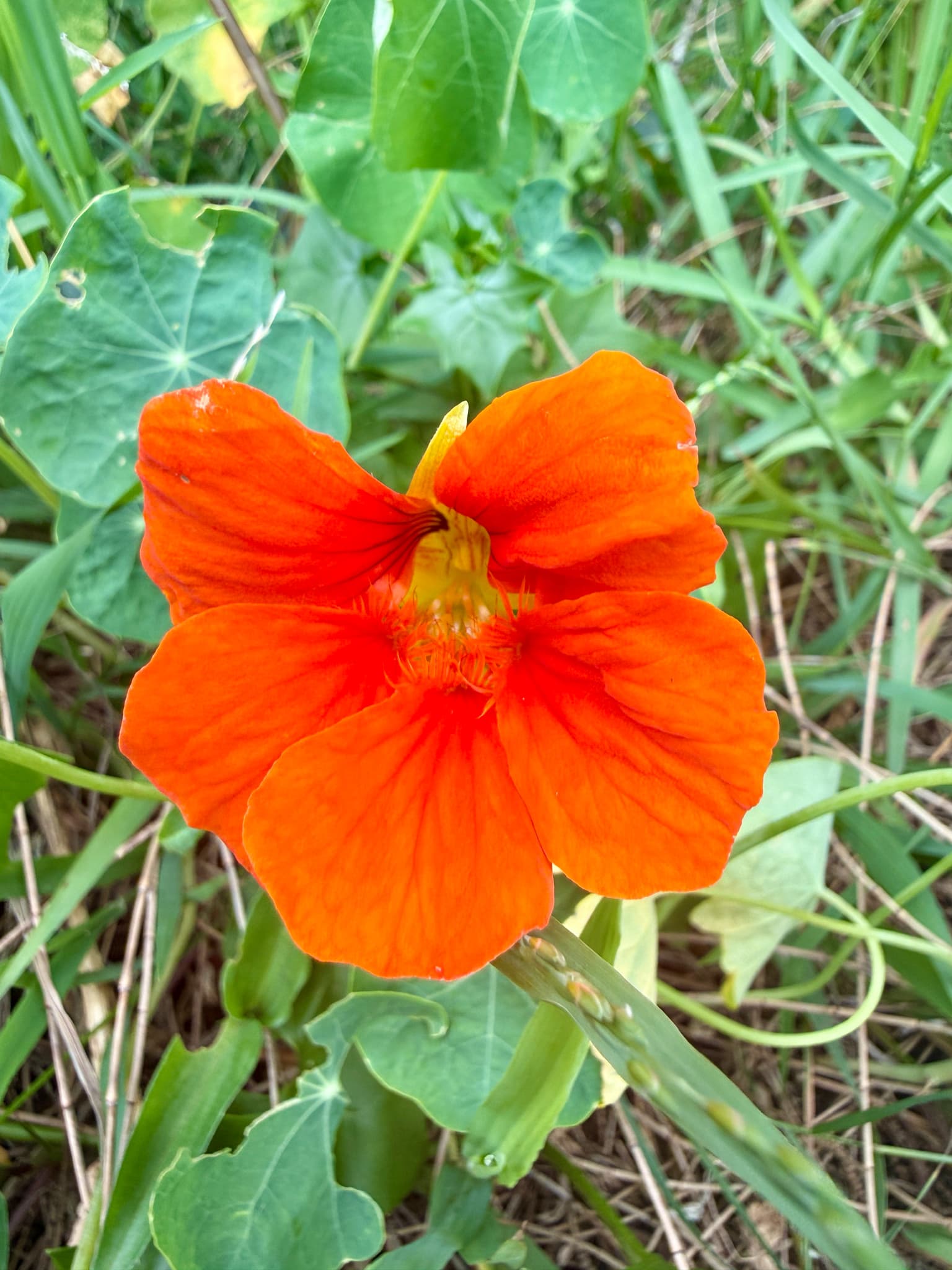
Nasturtium
Image: Stefano Caraco (cc-by-nc)
NameNasturtium
Scientific NameTropaeolum majus
Common NamesGarden Nasturtium, Indian Cress, Monk's Cress
Plant FamilyTropaeolaceae
Natural HabitatNative to the Andes from Bolivia to Colombia, it thrives in disturbed soils, gardens, and waste areas, often naturalizing in temperate regions worldwide. It prefers full sun to partial shade and well-drained soil.
Parts Usedleaf,flower,seed
Medicinal Actionsantimicrobial, anti-inflammatory, antioxidant, expectorant, diuretic
Traditional UsesTraditionally used for its antimicrobial properties, particularly for respiratory and urinary tract infections. It has been employed as an expectorant for coughs and bronchitis, and as a general tonic to boost immunity. The leaves and flowers are also consumed as a peppery salad green.
Active ConstituentsGlucosinolates, Benzyl isothiocyanate, Vitamin C, Carotenoids, Flavonoids
Preparation Methodsinfusion, tincture, powder, salve
Contraindications & WarningsMay cause gastrointestinal upset in sensitive individuals if consumed in large quantities. Not recommended for individuals with kidney disease or gastric ulcers due to its irritant properties. Avoid during pregnancy and breastfeeding due to lack of safety data.
Cultivation NotesEasy to grow from seed in full sun to partial shade. Prefers well-drained, moderately fertile soil; too much nitrogen can lead to lush foliage but fewer flowers. Can be grown as a climbing or trailing plant.
Raritycommon
Description
Tropaeolum majus is an annual or perennial herbaceous plant, often grown as an ornamental. It features distinctive round, peltate leaves and showy, often orange, red, or yellow, five-petaled flowers with a prominent spur. The plant has a peppery, pungent taste.