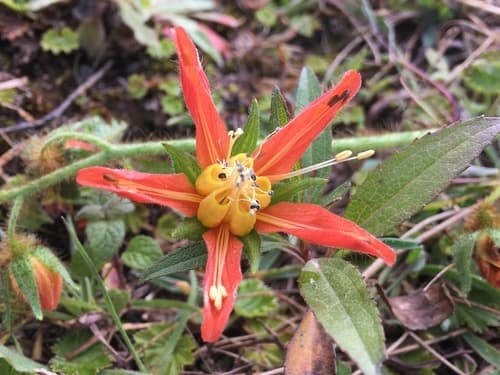
Nasa stolonifera
NameNasa stolonifera
Scientific NameNasa stolonifera
Common NamesOrtiga brava, Ortiga de la sierra, Andean Stinging Nettle
Plant FamilyLoasaceae
Natural HabitatNative to the high Andean regions of South America, particularly Peru and Bolivia, found in rocky slopes, disturbed areas, and agricultural fields at altitudes typically above 2500 meters.
Parts Usedleaf,whole_plant
Medicinal Actionsdiuretic, anti-inflammatory, analgesic
Traditional UsesTraditionally used in Andean folk medicine for its diuretic properties to treat kidney and urinary ailments. The stinging hairs are also intentionally applied to the skin (urtication) to alleviate rheumatic pain and arthritis, acting as a counter-irritant.
Active Constituentsflavonoids, phenolic compounds
Preparation Methodsinfusion, poultice
Contraindications & WarningsDirect skin contact with the stinging hairs can cause significant irritation and discomfort. Internal use should be done with caution and under expert guidance due to potential effects on kidney function and lack of extensive safety data.
Cultivation NotesNot commonly cultivated. It thrives in high-altitude, well-drained soils typical of its native Andean habitat. Requires specific environmental conditions and is known for its stinging hairs, making it less suitable for typical garden cultivation.
Rarityuncommon
Description
This herbaceous plant is characterized by its distinctive orange-red, star-shaped flowers with a prominent yellow central structure of staminodes and stamens. It features hairy stems and leaves, often equipped with stinging hairs (glochids), and grows low to the ground, sometimes spreading via stolons.