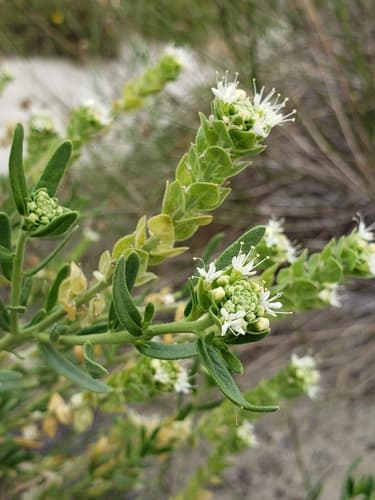
Narrowleaf Sandpaper Plant
NameNarrowleaf Sandpaper Plant
Scientific NameNama stenocarpa
Common NamesNarrowleaf Sandpaper Plant, Sandpaper Plant
Plant FamilyBoraginaceae
Natural HabitatNative to arid and semi-arid regions of the southwestern United States and northern Mexico. It typically grows in sandy or gravelly soils, desert washes, and disturbed areas.
Parts Usedwhole_plant
Medicinal Actionsantioxidant, anti-inflammatory
Traditional UsesTraditional medicinal uses for Nama stenocarpa are not widely documented in mainstream ethnobotanical literature. While many plants contain general beneficial compounds, specific historical medicinal applications for this particular species are not prominently recorded.
Active ConstituentsFlavonoids, Phenolic acids, Pyrrolizidine alkaloids (potential)
Preparation Methodsinfusion, decoction, powder
Contraindications & WarningsDue to the potential presence of pyrrolizidine alkaloids (common in the Boraginaceae family), internal use is generally not recommended as these compounds can be hepatotoxic. Lack of extensive research on its safety and efficacy also advises against internal medicinal use.
Cultivation NotesThis plant thrives in full sun and well-drained, sandy or gravelly soils, typical of its native desert habitats. It is drought-tolerant once established and requires minimal water.
Raritycommon
Description
Nama stenocarpa is an annual herb characterized by its erect to sprawling stems and narrow, linear to oblanceolate leaves that are typically rough or hairy to the touch, giving it its common name. It produces small, white to pale lavender, funnel-shaped flowers often clustered in terminal or axillary cymes.