Mullein
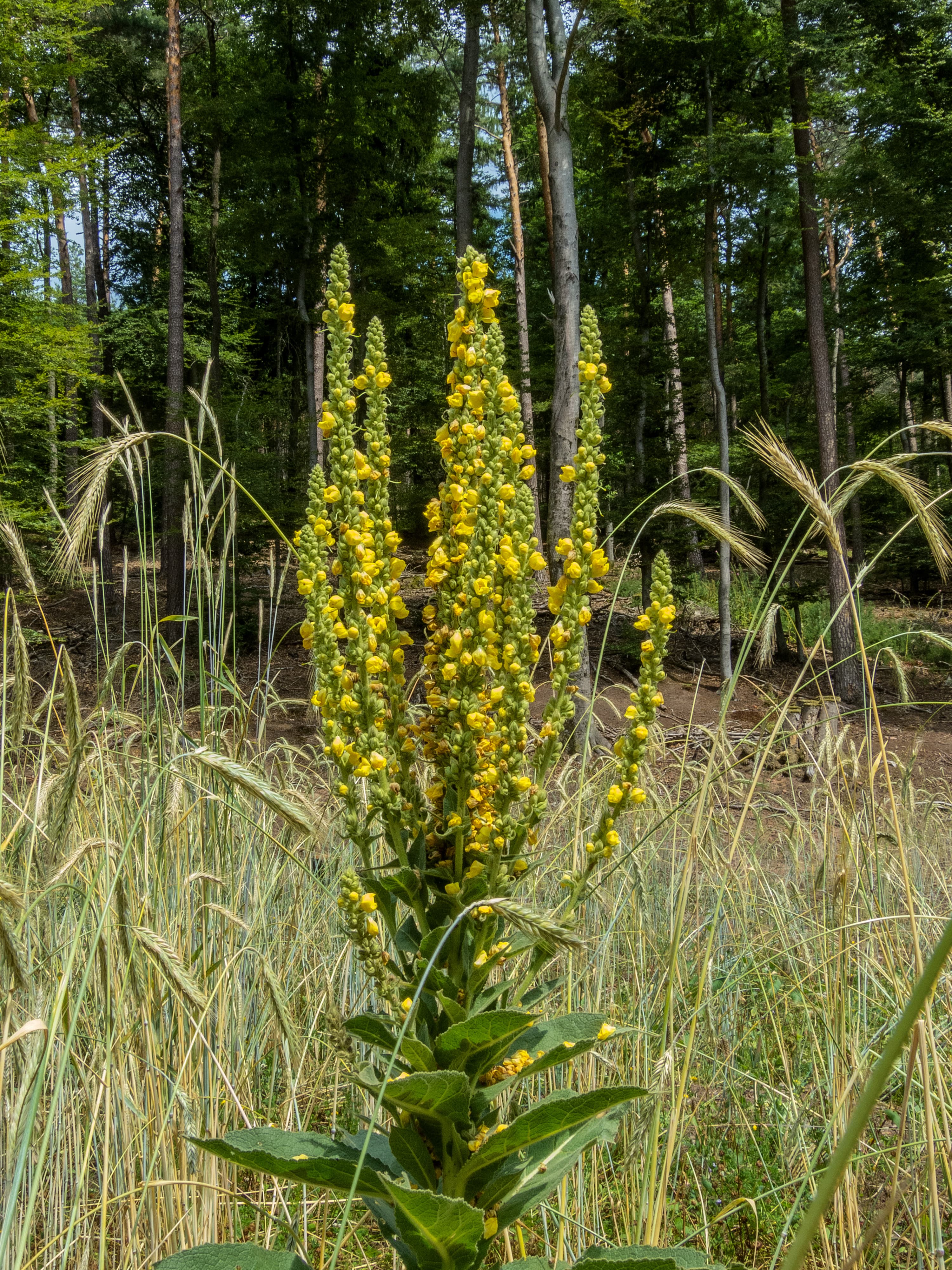
Image: Fischer.H (CC BY-SA 4.0)
NameMullein
Scientific NameVerbascum thapsus
Common NamesGreat Mullein, Common Mullein, Woolly Mullein, Aaron's Rod, Flannel Leaf, Candlewick Plant
Plant FamilyPlantaginaceae
Natural HabitatCommonly found in disturbed soils, roadsides, clearings, pastures, and open woodlands, preferring full sun. The specimen in the image was found on a wild field in the Palatinate Forest, Rhineland-Palatinate, Germany.
Parts Usedleaf,flower,root
Medicinal Actionsdemulcent, expectorant, anti-inflammatory, antimicrobial, astringent, sedative
Traditional UsesTraditionally used for respiratory conditions such as coughs, bronchitis, and asthma due to its expectorant and demulcent properties. The flowers and leaves are also used topically for ear infections, skin irritations, and as a mild sedative for nervous tension.
Active Constituentssaponins, mucilage, flavonoids, iridoid glycosides, verbascoside
Preparation Methodsinfusion, decoction, tincture, poultice, powder, salve
Contraindications & WarningsGenerally considered safe, but the fine hairs on the leaves can be irritating to mucous membranes if not properly filtered from infusions. No significant drug interactions are widely reported, but pregnant or breastfeeding women should consult a healthcare professional.
Cultivation NotesMullein is easy to grow from seed in full sun and well-drained, poor to average soil. It is drought-tolerant and self-seeds readily, often considered a pioneer plant in disturbed areas.
Raritycommon
Description
A tall, biennial herbaceous plant, Mullein forms a large rosette of soft, woolly leaves in its first year, followed by a single, erect flowering stalk up to 2 meters tall in its second year. The stalk is densely packed with numerous small, five-petaled yellow flowers that bloom progressively from bottom to top.