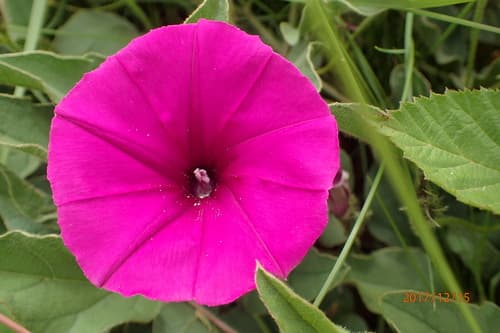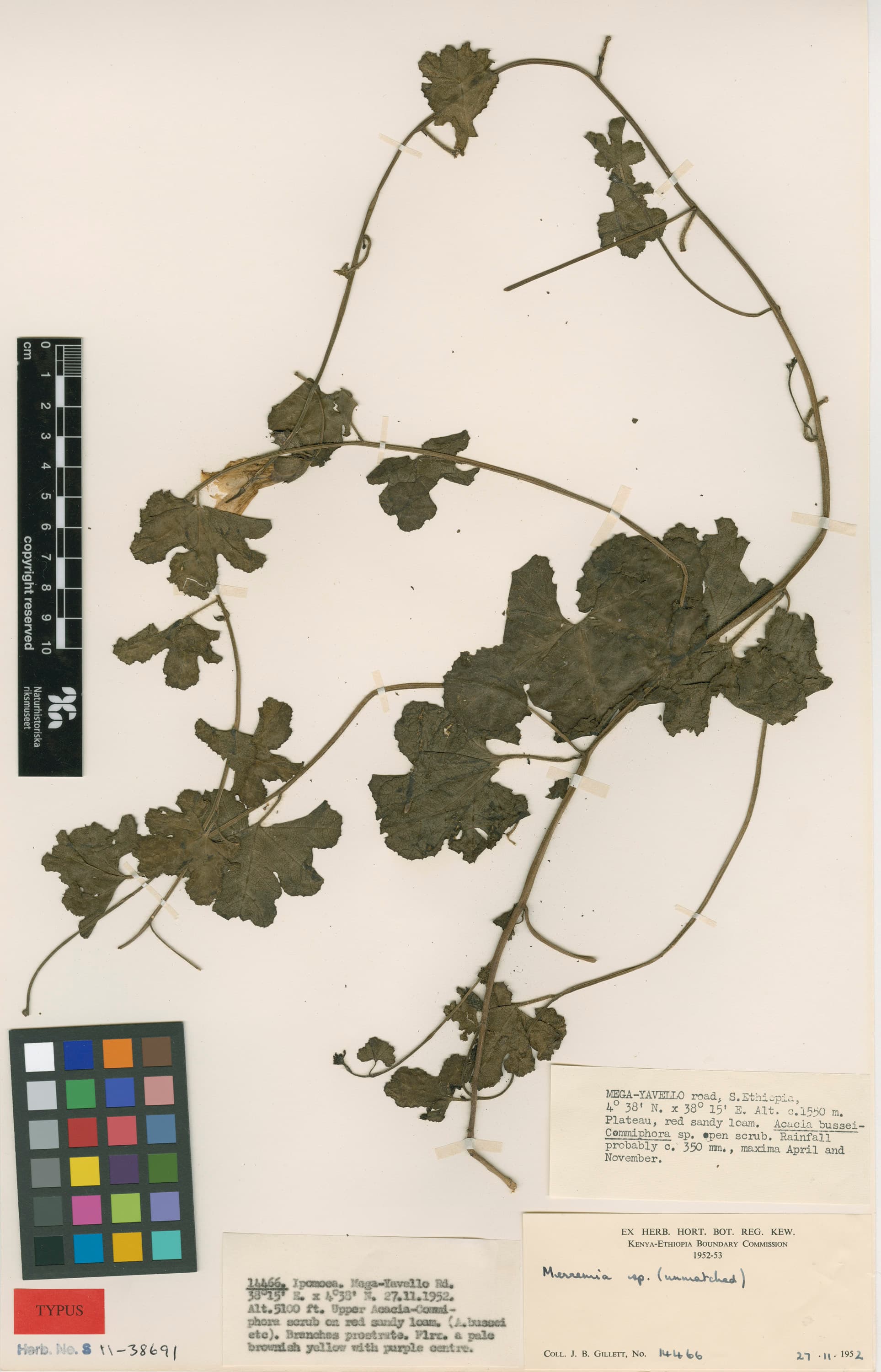
Merremia obtusa
Image: Gunilla Dahlerus Lehman (S) (cc-by)
NameMerremia obtusa
Scientific NameMerremia obtusa (Verdc.) Thulin
Plant FamilyConvolvulaceae
Natural HabitatNative to East Africa, particularly found in southern Ethiopia, growing on plateaus with red sandy loam soil in open scrubland. It thrives at altitudes around 1550 meters in regions with seasonal rainfall, often associated with Acacia and Commiphora species.
Parts Usedwhole_plant,leaf
Medicinal Actionsanti-inflammatory, antioxidant, diuretic
Traditional UsesSpecific traditional medicinal uses for Merremia obtusa are not widely documented in available ethnobotanical literature. However, other species within the Merremia genus are traditionally employed for various purposes, including addressing digestive complaints, treating skin conditions, and acting as purgatives.
Active ConstituentsTriterpenes, Flavonoids, Resin glycosides
Preparation Methodsinfusion, decoction, powder, poultice
Contraindications & WarningsDue to limited specific research on Merremia obtusa, general contraindications for plants in the Convolvulaceae family that may possess purgative or other potent effects include pregnancy, breastfeeding, and individuals with pre-existing gastrointestinal disorders. Consultation with a healthcare professional is advised.
Cultivation NotesThis species prefers warm climates and well-drained, sandy loam soils. It can be cultivated in open, sunny conditions and requires support if grown as a climbing vine. It is adapted to semi-arid environments with seasonal rainfall.
Rarityuncommon
Description
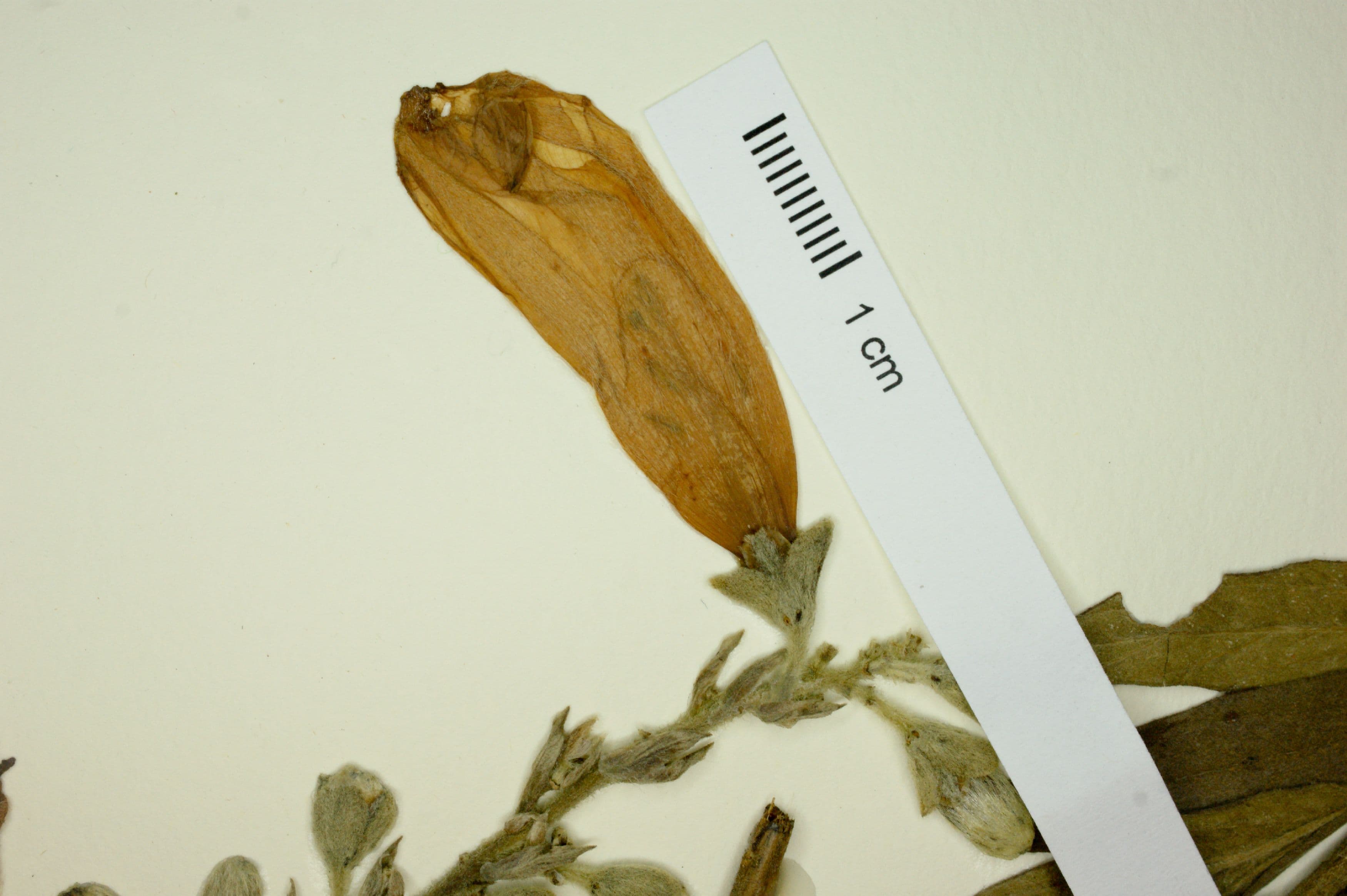
Merremia obtusa is a prostrate or climbing herbaceous vine characterized by stems that can root at the nodes and lobed leaves. Its flowers are described as pale brownish yellow with a distinctive purple center.