Mediterranean mandrake
NameMediterranean mandrake
Scientific NameMandragora autumnalis
Common NamesMediterranean mandrake, Autumn mandrake, Mandrake
Plant FamilySolanaceae
Natural HabitatNative to the Mediterranean region, found in disturbed ground, olive groves, vineyards, and rocky areas.
Parts Usedroot,fruit,leaf
Medicinal Actionsanalgesic, sedative
Traditional UsesHistorically used as a powerful sedative, analgesic, and anesthetic, particularly in ancient surgery. It also held significant cultural and magical importance in folklore, associated with fertility, protection, and divination, despite its extreme toxicity.
Active ConstituentsHyoscyamine, Scopolamine, Atropine
Preparation Methodsdecoction, tincture, poultice, powder
Contraindications & WarningsEXTREMELY TOXIC. All parts, especially the root, are highly poisonous due to tropane alkaloids. Internal use can cause severe anticholinergic poisoning, hallucinations, delirium, coma, and death. Absolutely contraindicated for internal use without expert medical supervision. Avoid during pregnancy, lactation, and in individuals with heart conditions, glaucoma, or prostate enlargement. Interacts with anticholinergic medications.
Cultivation NotesPrefers well-drained soil and full sun to partial shade. Hardy in Mediterranean climates. Can be challenging to cultivate from seed; often propagated by root division. Handle with extreme caution due to toxicity.
Rarityuncommon
Description
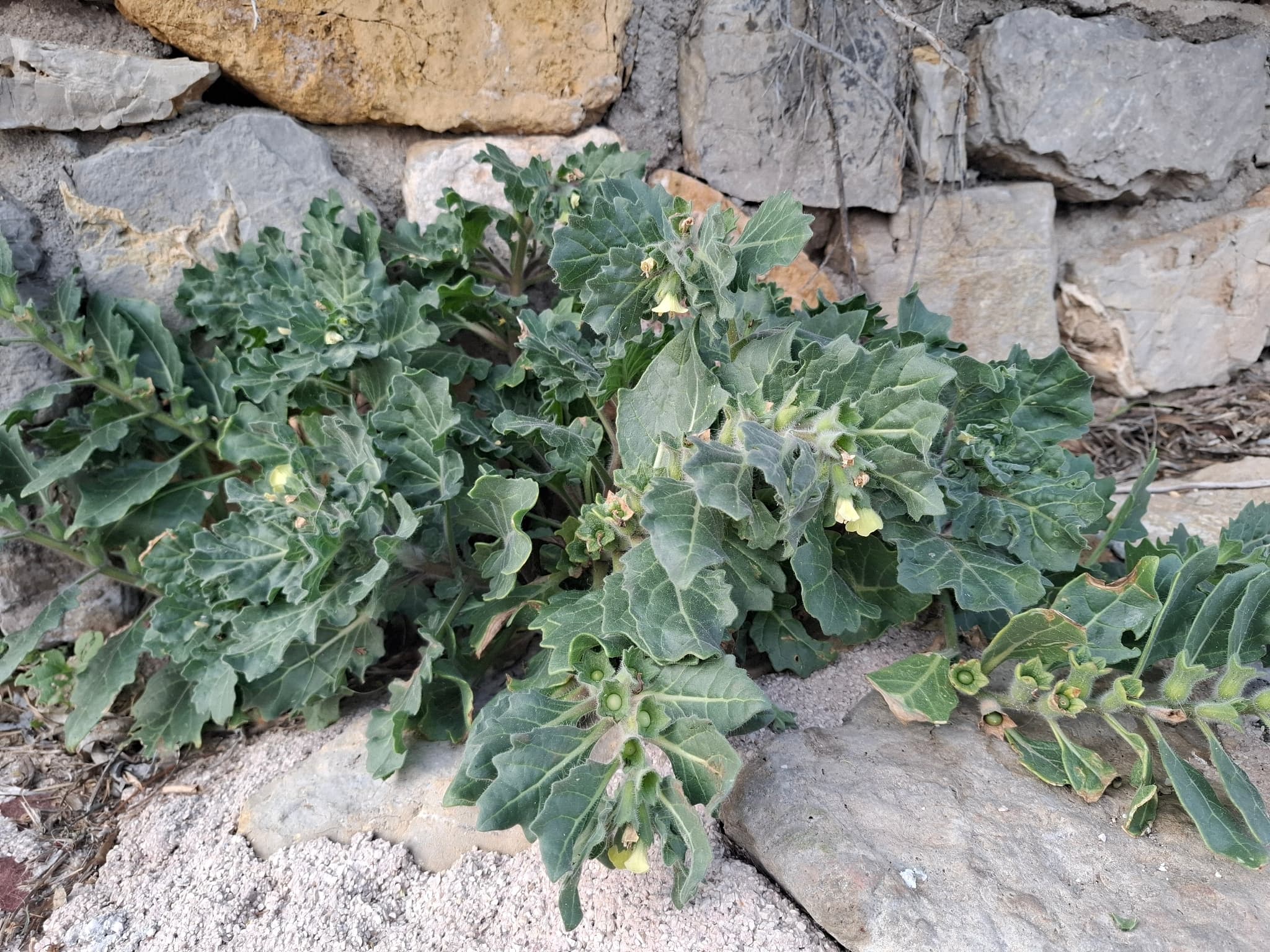
A perennial herbaceous plant forming a rosette of large, wrinkled leaves close to the ground. It produces pale blue to purple, bell-shaped flowers directly from the root crown, often in autumn, followed by yellow or orange berries.