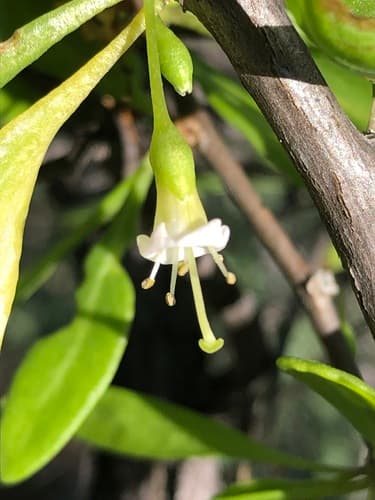
Lycium megacarpum
NameLycium megacarpum
Scientific NameLycium megacarpum
Common NamesLarge-fruited Desert Thorn, Big-fruited Lycium, Desert Wolfberry
Plant FamilySolanaceae
Natural HabitatArid and semi-arid regions, deserts, scrublands, washes, and rocky slopes, often found in alkaline soils. Native to the southwestern US (e.g., Arizona, California, Nevada) and northern Mexico.
Parts Usedfruit,leaf,root
Medicinal Actionsantioxidant, adaptogen, anti-inflammatory
Traditional UsesThe berries of Lycium species, including L. megacarpum, have traditionally been consumed by indigenous peoples for their nutritional value and potential health benefits. They are often eaten fresh or dried, and used as a general tonic to support overall well-being, vision, and immune function.
Active ConstituentsPolysaccharides, Carotenoids, Flavonoids, Vitamin C
Preparation Methodsinfusion, decoction, powder
Contraindications & WarningsGenerally considered safe when consumed as food. Potential interactions with anticoagulant medications (e.g., warfarin) have been reported for related Lycium species. May affect blood sugar levels; caution advised for individuals with diabetes. Allergic reactions are possible.
Cultivation NotesPrefers full sun and well-drained, often alkaline soils. Highly drought-tolerant once established. Can be propagated from seeds or cuttings. Requires minimal water and maintenance in suitable climates.
Raritycommon
Description
Lycium megacarpum is a thorny, deciduous shrub native to arid regions of the southwestern US and northern Mexico. It produces small, bell-shaped white to pale lavender flowers, followed by relatively large, red or orange berries. Its leaves are typically small and spatulate.