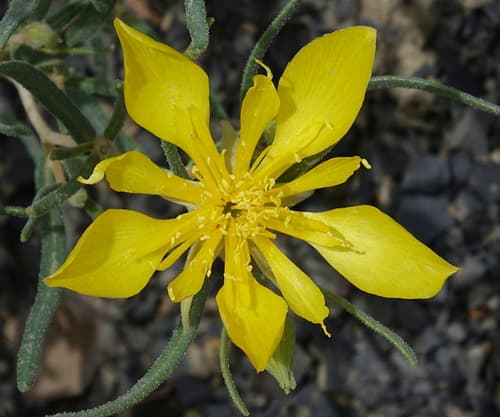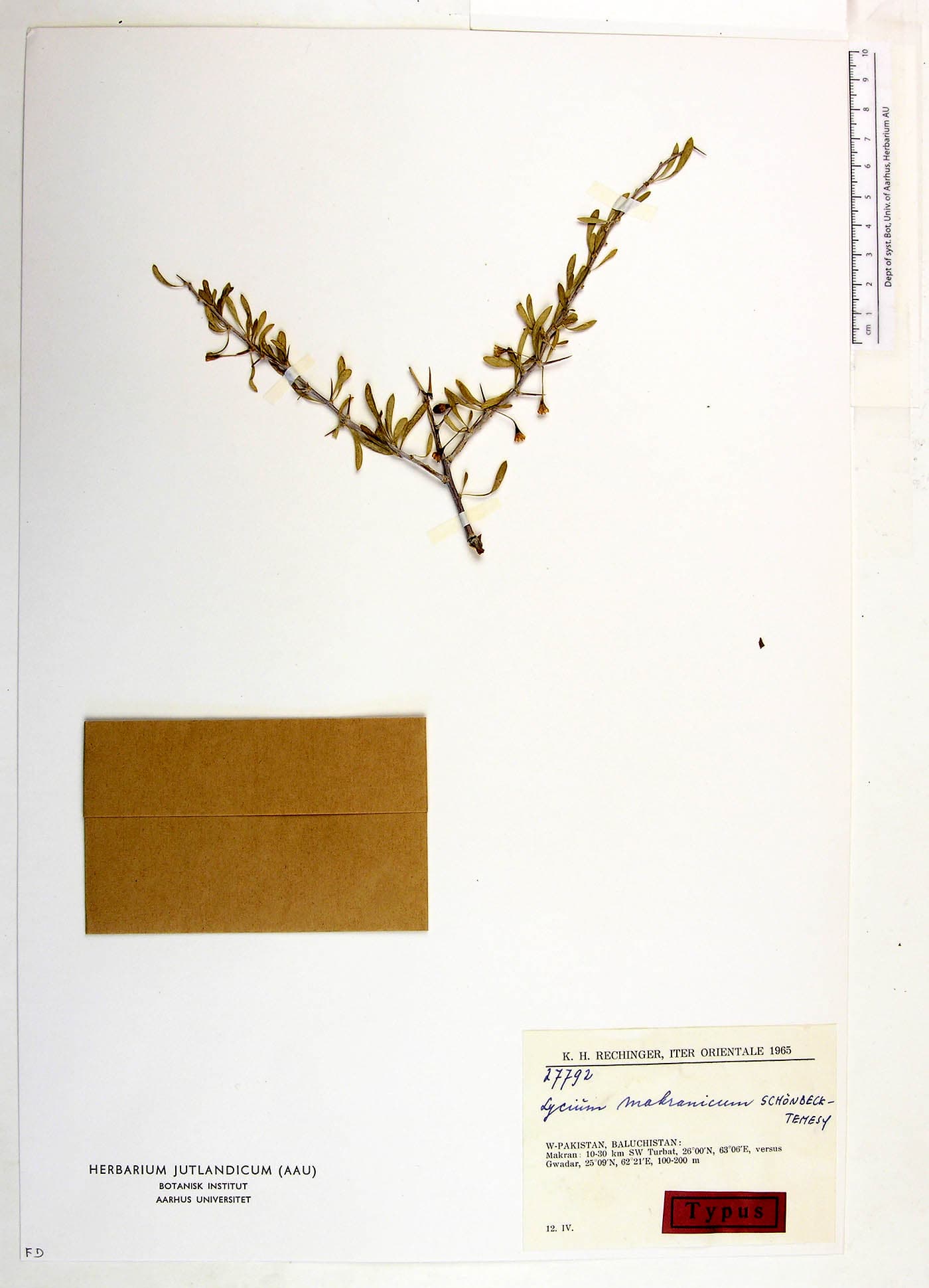
Lycium makranicum
Image: K.H. Rechinger (cc-by)
NameLycium makranicum
Scientific NameLycium makranicum Schönb.-Tem.
Common NamesMakran Desert Thorn, Desert Thorn
Plant FamilySolanaceae
Natural HabitatArid and semi-arid regions of Western Pakistan (Baluchistan, Makran) and potentially neighboring Iran, often found in rocky or sandy soils at elevations of 100-200 meters.
Parts Usedfruit,leaf
Medicinal Actionsantioxidant
Traditional UsesSpecific traditional medicinal uses for Lycium makranicum are not widely documented in ethnobotanical literature. However, other Lycium species are traditionally used for general health and vitality, often consumed for their purported antioxidant properties.
Active Constituentspolysaccharides, carotenoids, flavonoids, betaine
Preparation Methodsinfusion, powder
Contraindications & WarningsSpecific contraindications for Lycium makranicum are not well-documented. However, other Lycium species may interact with anticoagulant, blood pressure, and diabetes medications, and caution is advised.
Cultivation NotesPrefers full sun and well-drained, sandy or rocky soils. It is highly drought-tolerant and well-suited for arid and semi-arid climates, requiring minimal water once established.
Rarityuncommon
Description
A thorny, deciduous shrub native to arid regions, characterized by small, spatulate to obovate leaves and small, often solitary or paired flowers. The branches are typically spiny, and the plant produces small berries.