Lycium kopetdaghi
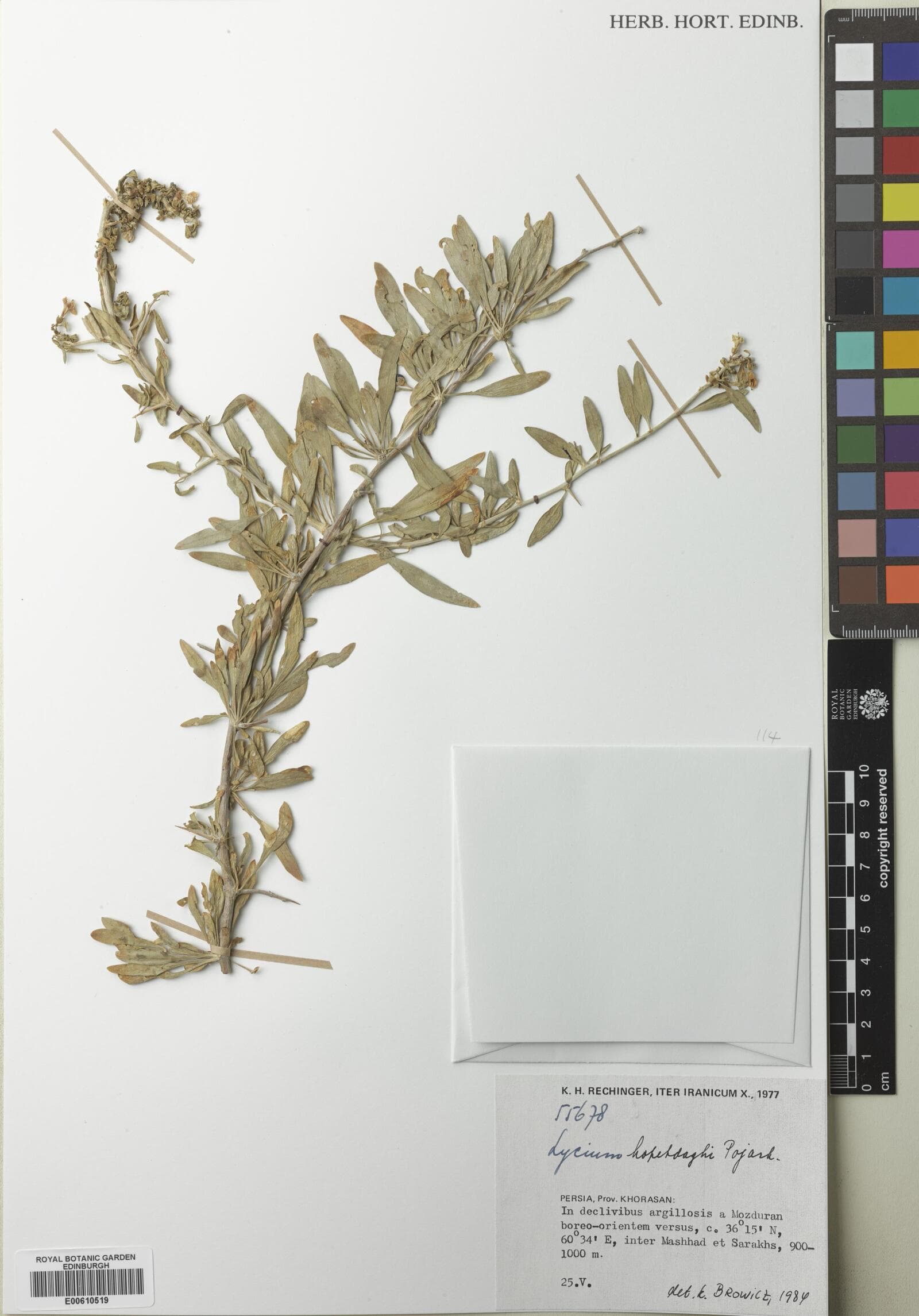
Image: Royal Botanic Garden Edinburgh (cc0)
NameLycium kopetdaghi
Scientific NameLycium kopetdaghi Pojark.
Plant FamilySolanaceae
Natural HabitatNative to arid and semi-arid regions of Central Asia, specifically found on argillaceous (clayey) slopes in areas like Khorasan province, Iran, at elevations around 900-1000 meters.
Parts Usedfruit,leaf,root
Medicinal Actionsantioxidant, adaptogen
Traditional UsesWhile specific traditional uses for Lycium kopetdaghi are not widely documented, other species within the Lycium genus (like Goji berries) are traditionally used in herbal medicine for general well-being, immune support, and to promote longevity, often consumed as a tonic.
Active Constituentspolysaccharides, carotenoids, flavonoids
Preparation Methodsinfusion, decoction, powder
Contraindications & WarningsMay interact with anticoagulant medications (e.g., warfarin) and potentially affect blood sugar or blood pressure levels. Pregnant or breastfeeding individuals should consult a healthcare professional before use.
Cultivation NotesPrefers full sun exposure and well-drained, even clayey, soils. It is likely drought-tolerant once established and can withstand arid or semi-arid conditions typical of its native range.
Rarityuncommon
Description
A thorny, deciduous shrub native to Central Asia, characterized by small, somewhat lanceolate leaves arranged alternately along woody stems. Like other species in the Lycium genus, it produces small flowers and is expected to bear small, edible berries.