Lycium deserti
Image: Conveyor Belt (cc0)
NameLycium deserti
Scientific NameLycium deserti Phil.
Common NamesDesert Boxthorn
Plant FamilySolanaceae
Natural HabitatNative to the Atacama Desert and other arid to semi-arid regions of Chile, thriving in dry, rocky, or sandy soils. It is well-adapted to harsh desert conditions, often found at various altitudes.
Parts Usedfruit,leaf
Medicinal Actionsantioxidant, adaptogen, anti-inflammatory
Traditional UsesWhile specific traditional uses for Lycium deserti are not widely documented, other species within the Lycium genus are traditionally used as a general tonic to support overall health, boost immunity, and improve vitality. The berries are often consumed for their nutritional value and potential health benefits.
Active Constituentspolysaccharides, carotenoids, flavonoids, vitamins
Preparation Methodsinfusion, powder, decoction
Contraindications & WarningsSpecific contraindications for Lycium deserti are not well-established. However, other Lycium species may interact with anticoagulant medications (e.g., warfarin) and potentially with medications for diabetes or high blood pressure. Pregnant or breastfeeding individuals should consult a healthcare professional before use.
Cultivation NotesThis drought-tolerant shrub thrives in full sun and well-drained, sandy or rocky soils, typical of desert environments. It requires minimal water once established and can withstand poor soil conditions, making it suitable for xeriscaping in appropriate climates.
Rarityuncommon
Description
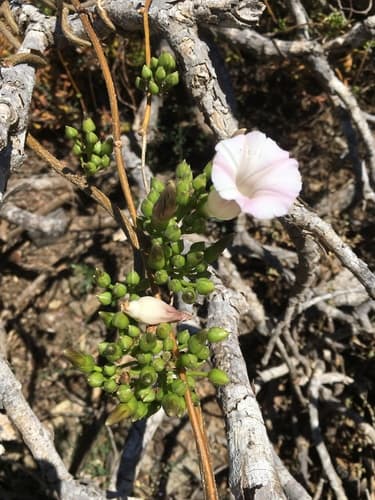
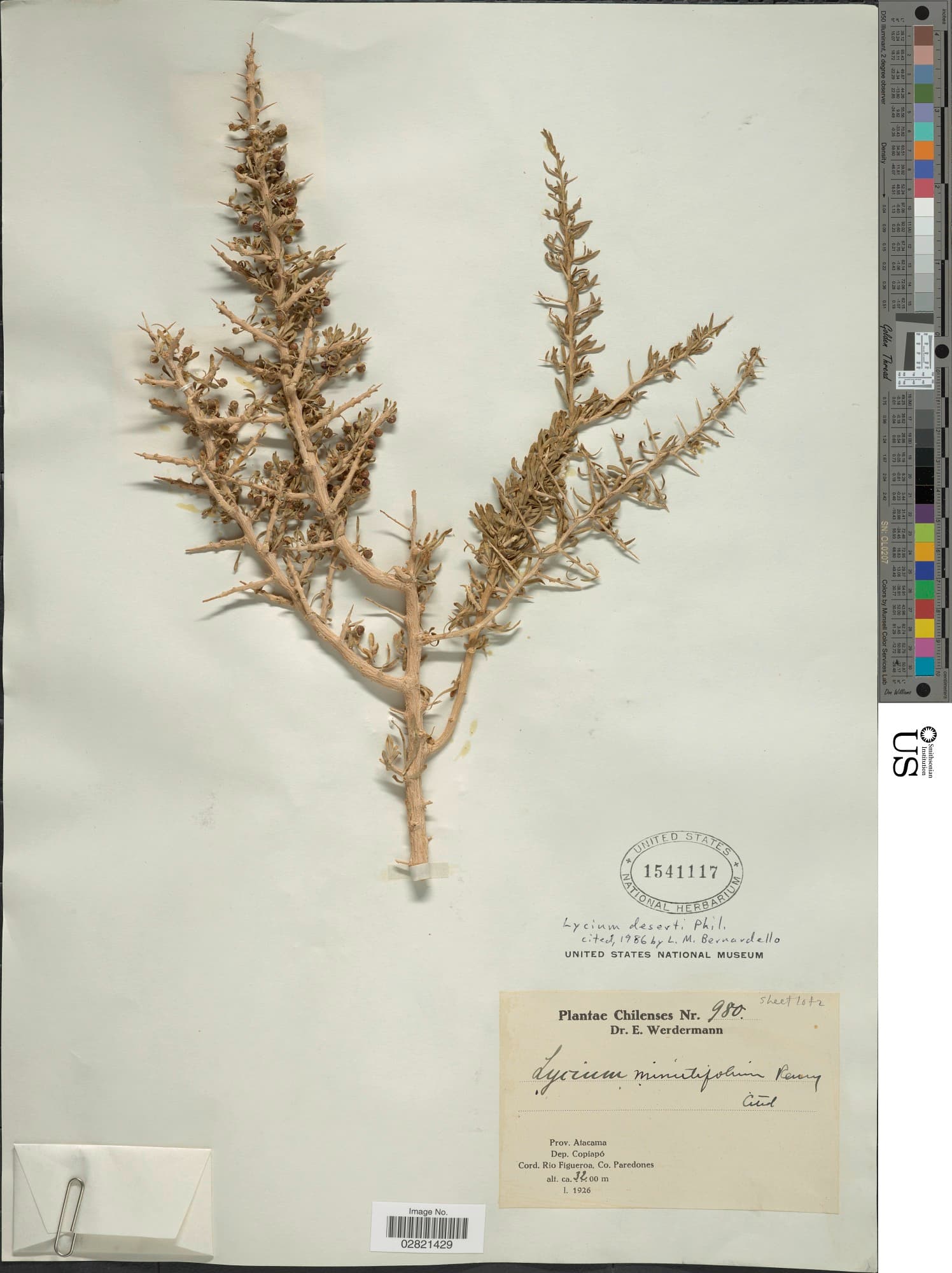
A thorny, deciduous shrub native to the arid regions of Chile. It features woody, branched stems, often with prominent thorns and small, sometimes reduced leaves. The plant produces small, round berries, which are visible in their dried state on the specimen.