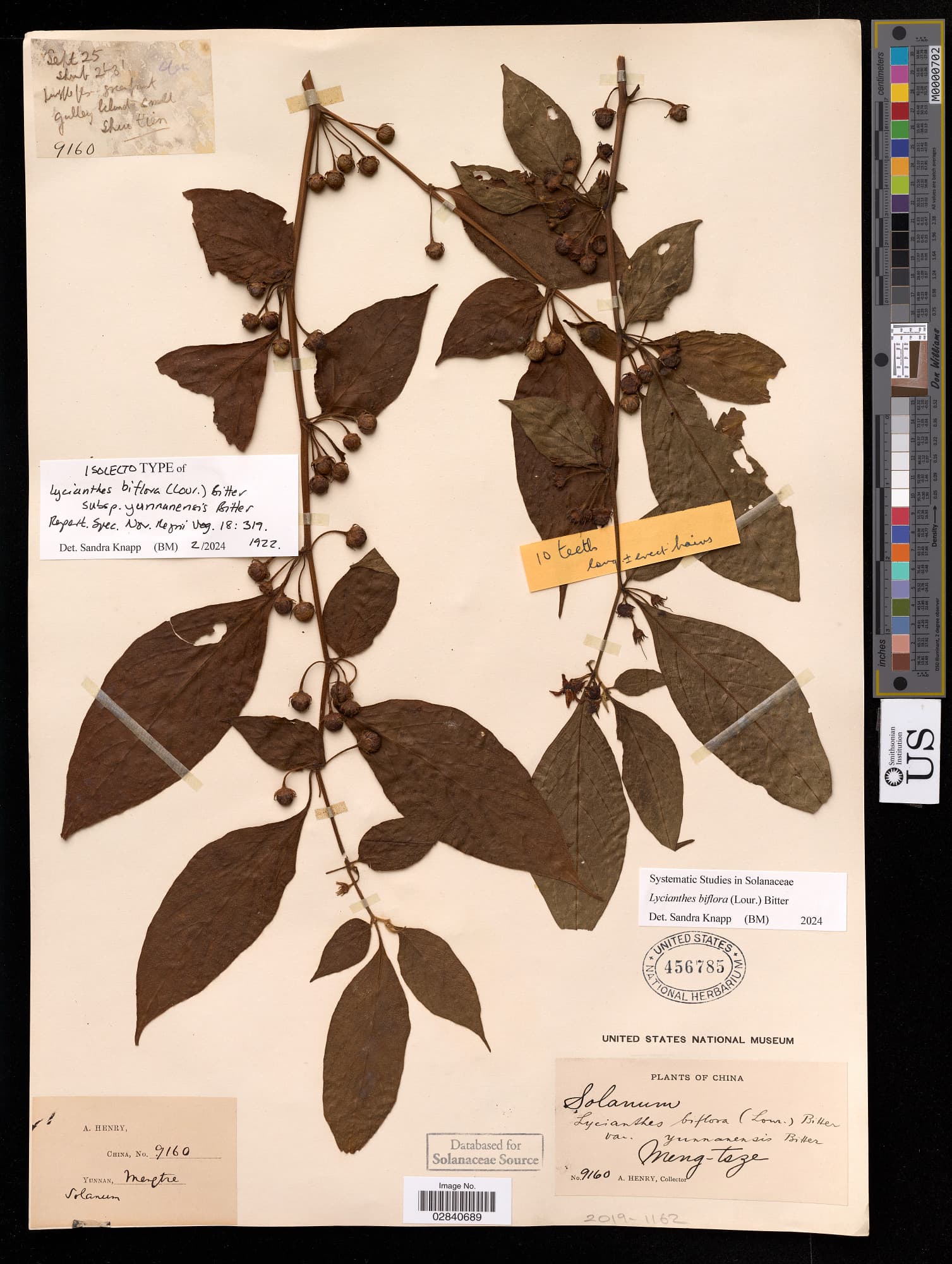
Lycianthes yunnanensis
Image: Ingrid P. Lin (cc0)
NameLycianthes yunnanensis
Scientific NameLycianthes biflora subsp. yunnanensis Bitter
Plant FamilySolanaceae
Natural HabitatNative to Yunnan, China, specifically collected from Meng-tze. It is found growing as a small shrub in gullies and on hillsides, suggesting a preference for well-drained, possibly disturbed, mountainous or hilly environments.
Parts Usedleaf,fruit
Medicinal Actionsanti-inflammatory, analgesic
Traditional UsesWhile specific traditional uses for Lycianthes biflora subsp. yunnanensis are not widely documented in common ethnobotanical sources, other species within the Lycianthes genus and the broader Solanaceae family have been traditionally employed in various cultures for their anti-inflammatory and pain-relieving properties. Further specific research is needed for this subspecies.
Preparation Methodsinfusion, decoction
Contraindications & WarningsNo specific contraindications are documented for this subspecies. However, many plants in the Solanaceae family contain potent alkaloids, and caution is advised with internal use without expert guidance due to potential toxicity.
Cultivation NotesLikely thrives in well-drained soils, similar to its native habitat in the hilly and gulley regions of Yunnan, China. As a small shrub, it may tolerate a range of light conditions typical of understory or hillside environments.
Rarityuncommon
Description
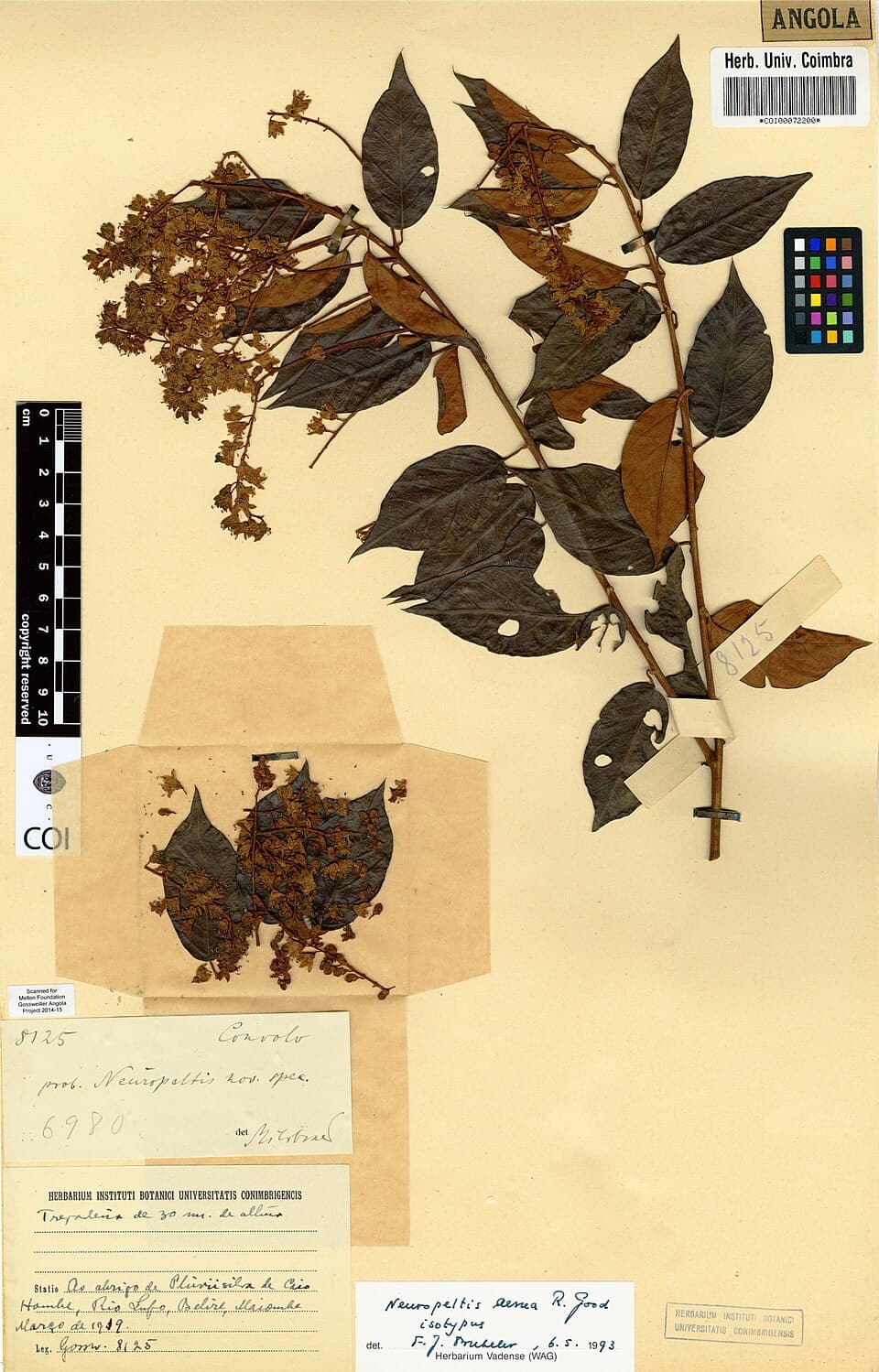
A woody shrub characterized by alternate, ovate to lanceolate leaves, which appear dark and somewhat leathery in the dried specimen. It bears small, globose, berry-like fruits clustered along the stems, often in the leaf axils.