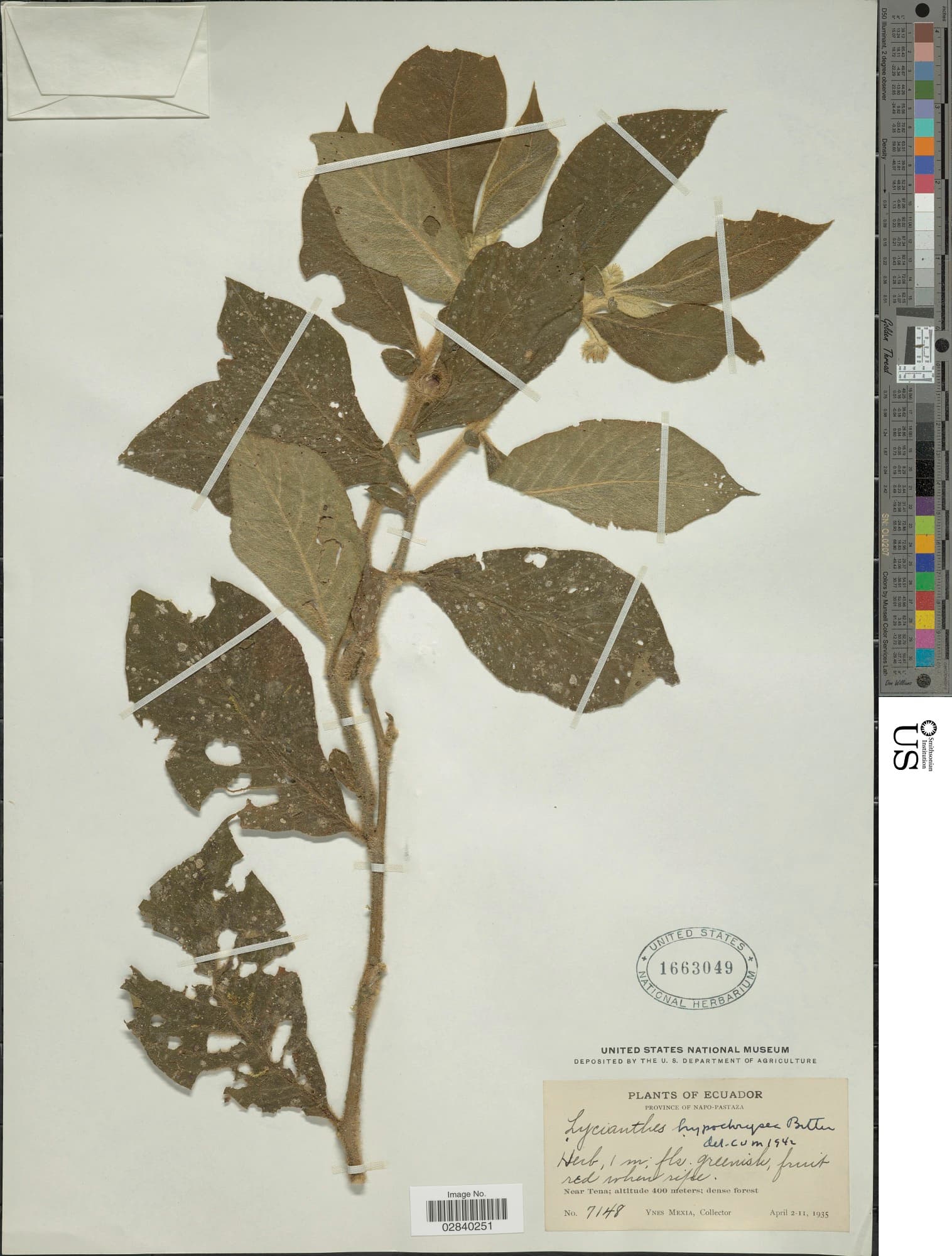
Lycianthes hypochrysea
Image: Conveyor Belt (cc0)
NameLycianthes hypochrysea
Scientific NameLycianthes hypochrysea
Plant FamilySolanaceae
Natural HabitatNative to dense forests near Tena, Ecuador, found at altitudes around 400 meters. It thrives in tropical, humid environments.
Parts Used
Traditional UsesSpecific traditional medicinal uses for Lycianthes hypochrysea are not well-documented in available ethnobotanical literature. While some species within the Lycianthes genus have edible fruits or traditional uses for inflammation or pain, these are highly species-specific and cannot be attributed to L. hypochrysea without direct evidence.
Contraindications & WarningsDue to the lack of specific ethnobotanical and pharmacological data for Lycianthes hypochrysea, and considering that many plants in the Solanaceae family can contain toxic alkaloids, it is not recommended for medicinal use. No specific contraindications are documented.
Cultivation NotesThis species likely prefers tropical, humid conditions with partial shade, mimicking its natural habitat in dense Ecuadorian forests. It would require well-drained, rich soil.
Rarityuncommon
Description
A herbaceous plant or small shrub, typically growing to about 1 meter in height. It features ovate leaves, often with a golden-pubescent underside, and produces greenish flowers followed by red fruits when ripe.