Leichhardt's corkwood
NameLeichhardt's corkwood
Scientific NameDuboisia leichhardtii
Common NamesLeichhardt's corkwood, Corkwood
Plant FamilySolanaceae
Natural HabitatNative to Queensland, Australia, this species typically grows in dry rainforests, open woodlands, and along the margins of forests, preferring well-drained soils.
Parts Usedleaf,bark
Medicinal Actionssedative, analgesic
Traditional UsesTraditionally, Indigenous Australians used parts of Duboisia species with extreme caution as a narcotic, fish poison, and for pain relief. In modern medicine, it is primarily cultivated for the pharmaceutical extraction of potent tropane alkaloids like scopolamine and hyoscyamine, which are used in medications for motion sickness, antispasmodics, and pre-operative sedation.
Active ConstituentsScopolamine (Hyoscine), Hyoscyamine (Atropine isomer), Duboisine
Preparation Methodspowder, tincture
Contraindications & WarningsThis plant is highly toxic due to its potent tropane alkaloids and is not safe for self-medication. Ingestion can cause severe anticholinergic syndrome, including dry mouth, blurred vision, urinary retention, constipation, tachycardia, hallucinations, delirium, and coma. It is contraindicated for pregnant or nursing women, children, and individuals with glaucoma, heart conditions, or prostate enlargement. It interacts dangerously with other anticholinergic drugs, sedatives, and CNS depressants.
Cultivation NotesLeichhardt's corkwood prefers well-drained soil and a warm, subtropical to tropical climate. It can tolerate some drought once established and is typically propagated by seed or cuttings. Due to its toxicity, careful handling is required.
Raritycommon
Description
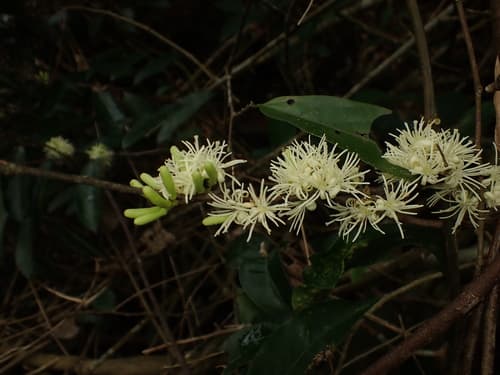
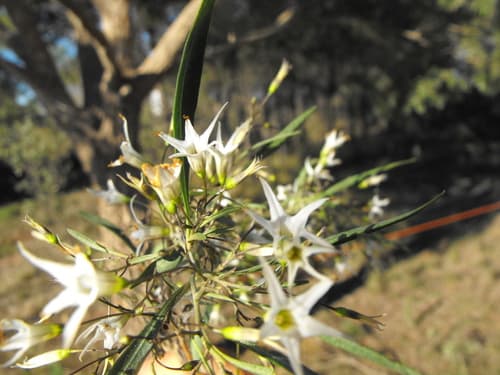
Leichhardt's corkwood is a small tree or shrub characterized by its slender, often somewhat leathery, lanceolate leaves. It produces clusters of small, star-shaped white flowers with a yellowish throat, which are visible in the image. The plant later develops small, dark berries.