Lanceleaf Nightshade
NameLanceleaf Nightshade
Scientific NameSolanum elaeagnifolium
Common NamesLanceleaf Nightshade, Silverleaf Nightshade, White Horse Nettle, Silverleaf Nettle
Plant FamilySolanaceae
Natural HabitatNative to the Americas, commonly found in disturbed areas, pastures, roadsides, and agricultural fields, thriving in arid to semi-arid regions. It is often considered a noxious weed.
Parts Usedfruit,leaf
Medicinal Actionsantimicrobial
Traditional UsesHistorically, the fruit was used by some Native American tribes as a rennet substitute for curdling milk. Due to its high toxicity, internal medicinal use is not recommended. Extremely limited and highly cautious external applications for certain skin conditions have been reported in some traditional practices, but carry significant risk.
Active ConstituentsSolasodine, Solamargine, Solasonine, Steroidal glycoalkaloids
Contraindications & WarningsAll parts of the plant, especially the berries, are highly toxic due to the presence of steroidal glycoalkaloids. Ingestion can cause severe gastrointestinal upset, neurological symptoms, and can be fatal to humans and livestock. Contact with sap can cause skin irritation. Not recommended for any internal medicinal use.
Cultivation NotesOften considered a noxious weed, it is drought-tolerant and thrives in poor, disturbed soils. It spreads aggressively via seeds and rhizomes, making it difficult to eradicate.
Raritycommon
Description
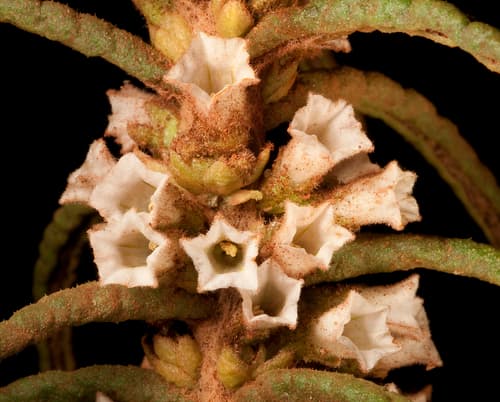
A perennial herbaceous plant or small shrub, characterized by its silvery, woolly stems and lance-shaped leaves. It produces striking star-shaped, violet-purple flowers with prominent yellow anthers, followed by small, round, orange to brown berries.