Koehne's Dogwood
Image: Conveyor Belt (cc0)
NameKoehne's Dogwood
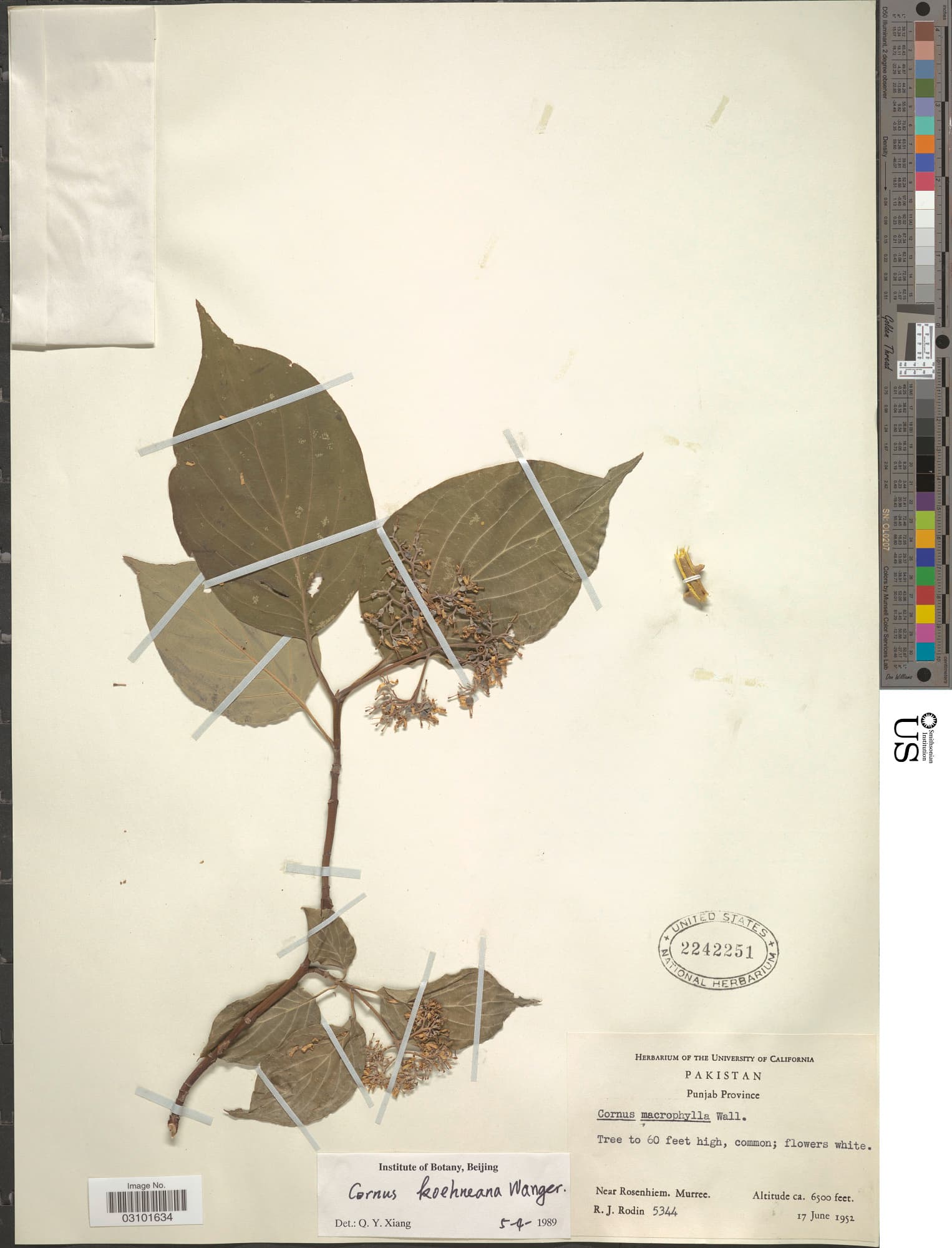
Scientific NameCornus koehneana Wangerin
Common NamesKoehne's Dogwood, Large-leaved Dogwood
Plant FamilyCornaceae
Natural HabitatNative to East Asia and parts of the Himalayas, including Pakistan. It typically grows in woodlands, forest margins, and mountainous regions at moderate to high altitudes.
Parts Usedbark,fruit,leaf
Medicinal Actionsastringent, anti-inflammatory, antioxidant
Traditional UsesTraditionally, the bark and fruit of Cornus species, including those closely related to C. koehneana, have been used as an astringent to treat diarrhea, dysentery, and hemorrhages. The bark has also been employed as a febrifuge and antimalarial. The fruits are sometimes used as a tonic.
Active ConstituentsIridoid glycosides, Tannins, Flavonoids
Preparation Methodsdecoction, infusion, powder
Contraindications & WarningsDue to its astringent properties, excessive consumption may lead to constipation. Pregnant or nursing individuals and those with pre-existing medical conditions should consult a healthcare professional before use.
Cultivation NotesPrefers well-drained, fertile soil in full sun to partial shade. It is adaptable to various soil types but thrives in slightly acidic to neutral conditions. Requires moderate watering, especially during dry periods.
Raritycommon
Description
A deciduous tree growing up to 20 meters tall, characterized by broad, ovate to elliptic leaves with prominent venation. It produces clusters of small, white flowers in cymes, followed by dark blue or black drupes.