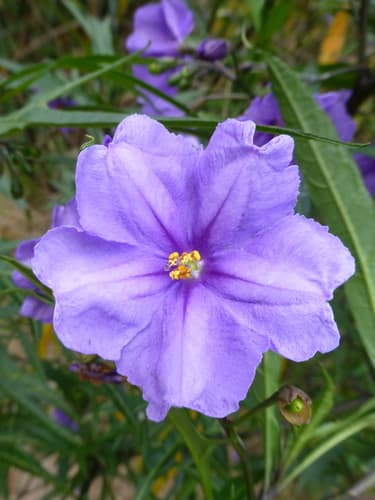
Kangaroo Apple
NameKangaroo Apple
Scientific NameSolanum laciniatum
Common NamesKangaroo Apple, Poroporo, New Zealand Nightshade, Large Kangaroo Apple
Plant FamilySolanaceae
Natural HabitatNative to Australia and New Zealand, it thrives in open forests, forest margins, and disturbed areas, preferring moist, well-drained soils.
Parts Usedleaf,fruit
Medicinal Actionsanti-inflammatory
Traditional UsesTraditionally, the leaves and unripe fruits were used externally by Indigenous Australians and Māori as a poultice for skin ailments, boils, and swellings. Internal use was rare and highly cautious due to toxicity.
Active ConstituentsSolasodine, Solamargine, Solasonine
Preparation Methodspoultice, decoction
Contraindications & WarningsAll parts of the plant, especially unripe fruits, are toxic if ingested due to steroidal glycoalkaloids. Ripe fruits are generally considered edible but should be consumed in moderation. Avoid use during pregnancy or breastfeeding, and in individuals with liver or kidney conditions. External use should be done with caution.
Cultivation NotesThis shrub prefers full sun to partial shade and well-drained soil. It is frost-tender and can be propagated from seeds or cuttings, growing rapidly.
Raritycommon
Description
Kangaroo Apple is a fast-growing, soft-wooded shrub known for its deeply lobed leaves and striking purple, star-shaped flowers. These flowers develop into orange-yellow, egg-shaped fruits when ripe.