Lesser Calamint
NameLesser Calamint
Scientific NameClinopodium nepeta
Common NamesLesser Calamint, Basil Thyme, Field Balm, Calamint
Plant FamilyLamiaceae
Natural HabitatNative to Europe, North Africa, and parts of Asia, it thrives in dry, sunny, well-drained locations such as meadows, open woodlands, and rocky slopes.
Parts Usedleaf,flower,whole_plant
Medicinal Actionsantimicrobial, carminative, expectorant, nervine, diuretic, anti-inflammatory, antioxidant
Traditional UsesTraditionally used for digestive issues like indigestion and flatulence, and for respiratory complaints such as coughs, colds, and mild fevers. It has also been employed as a mild nervine for anxiety and sleeplessness.
Active ConstituentsPulegone, Menthone, Isomenthone, Limonene, Cineole, Flavonoids, Rosmarinic acid
Preparation Methodsinfusion, tincture, essential oil, poultice
Contraindications & WarningsHigh pulegone content in some varieties makes essential oil use risky, especially for pregnant or breastfeeding women and those with liver conditions. Use with caution.
Cultivation NotesEasy to grow in full sun to partial shade and well-drained soil. It is drought-tolerant once established and can self-seed readily.
Raritycommon
Description
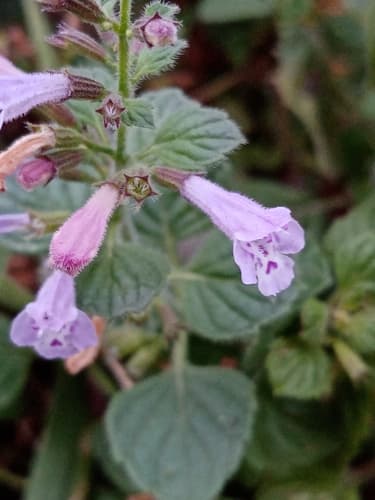
A perennial herb growing up to 60 cm tall, with square, hairy stems and opposite, ovate, aromatic leaves. It produces small, pale purple to pinkish-white, two-lipped tubular flowers in whorls in the leaf axils.