Jaltomata grandibaccata
NameJaltomata grandibaccata
Scientific NameJaltomata grandibaccata
Common NamesJaltomata, Andean Bellflower
Plant FamilySolanaceae
Natural HabitatNative to the high-altitude montane regions of the Andes in South America, particularly Peru and Bolivia. It thrives in cloud forests, disturbed areas, and rocky slopes at elevations typically above 2000 meters.
Parts Usedfruit,leaf
Medicinal Actionsantioxidant, anti-inflammatory
Traditional UsesThe primary traditional use of Jaltomata grandibaccata is the consumption of its ripe fruits, which are eaten raw or cooked by local Andean communities for their sweet flavor and nutritional value. While specific medicinal uses for this species are not widely documented, other Jaltomata species have been used locally for minor ailments, suggesting potential broader traditional applications within the genus.
Active Constituentssteroidal alkaloids, flavonoids, phenolic compounds, vitamins
Preparation Methodsinfusion, powder
Contraindications & WarningsAs a member of the Solanaceae family, general caution is advised regarding potential toxicity of unripe fruits or other plant parts due to alkaloid content, although ripe fruits of many Jaltomata species are considered safe for consumption. Specific contraindications for Jaltomata grandibaccata are not well-documented.
Cultivation NotesPrefers well-drained soil, full sun to partial shade, and a temperate to subtropical climate, often found in montane environments. It can be propagated from seed.
Rarityuncommon
Description
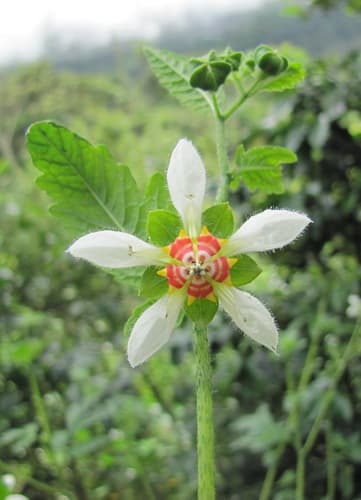
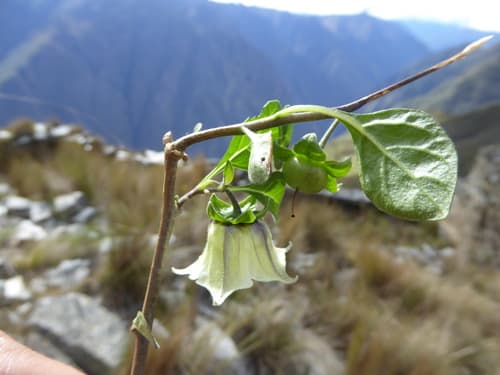
Jaltomata grandibaccata is a perennial herb or subshrub characterized by its pendulous, bell-shaped flowers, typically pale green to whitish with purple venation. It produces spherical, fleshy berries that are often edible when ripe, and features simple, ovate leaves arranged alternately along its stems.