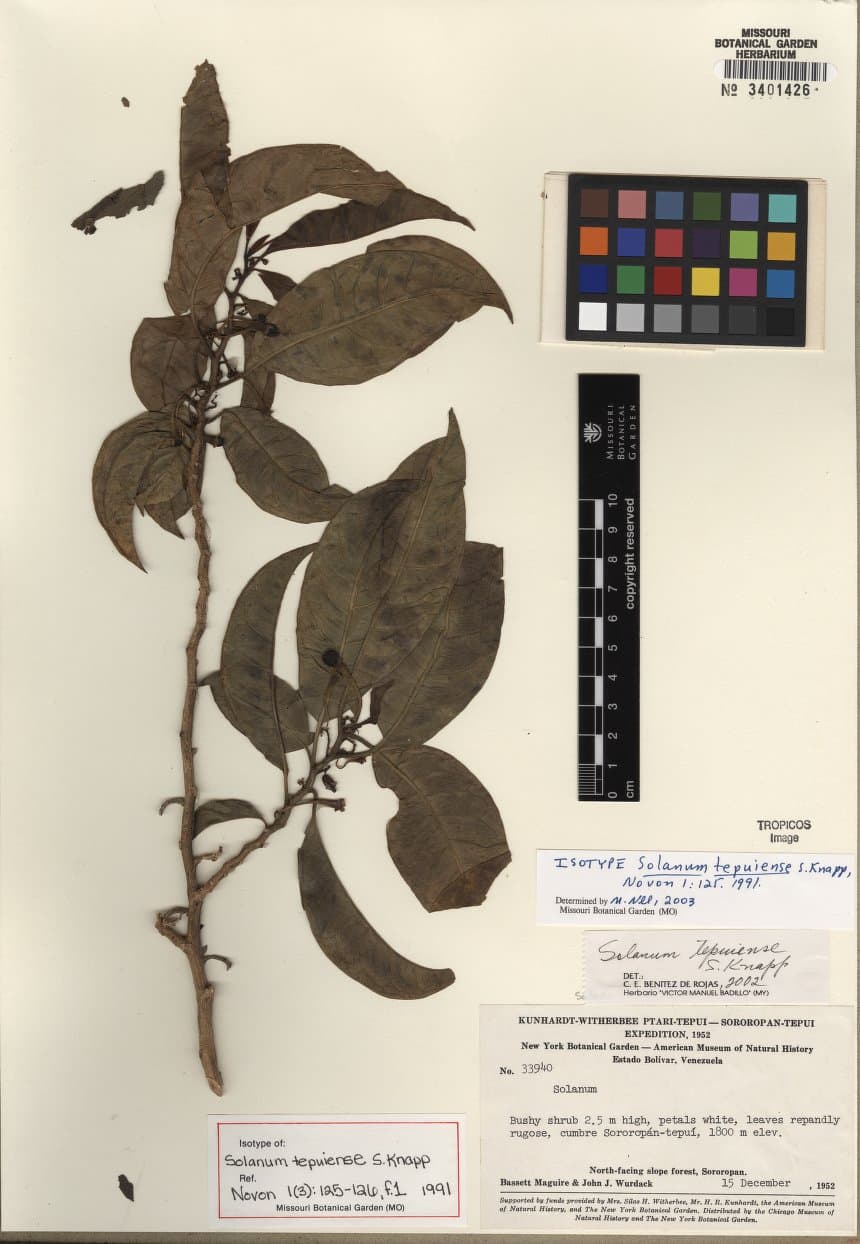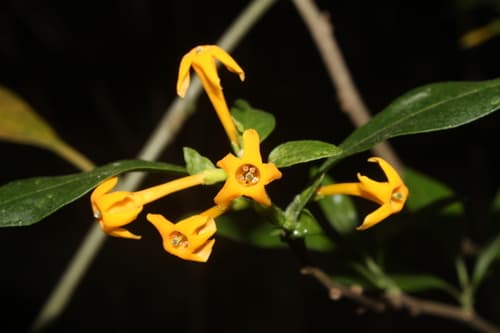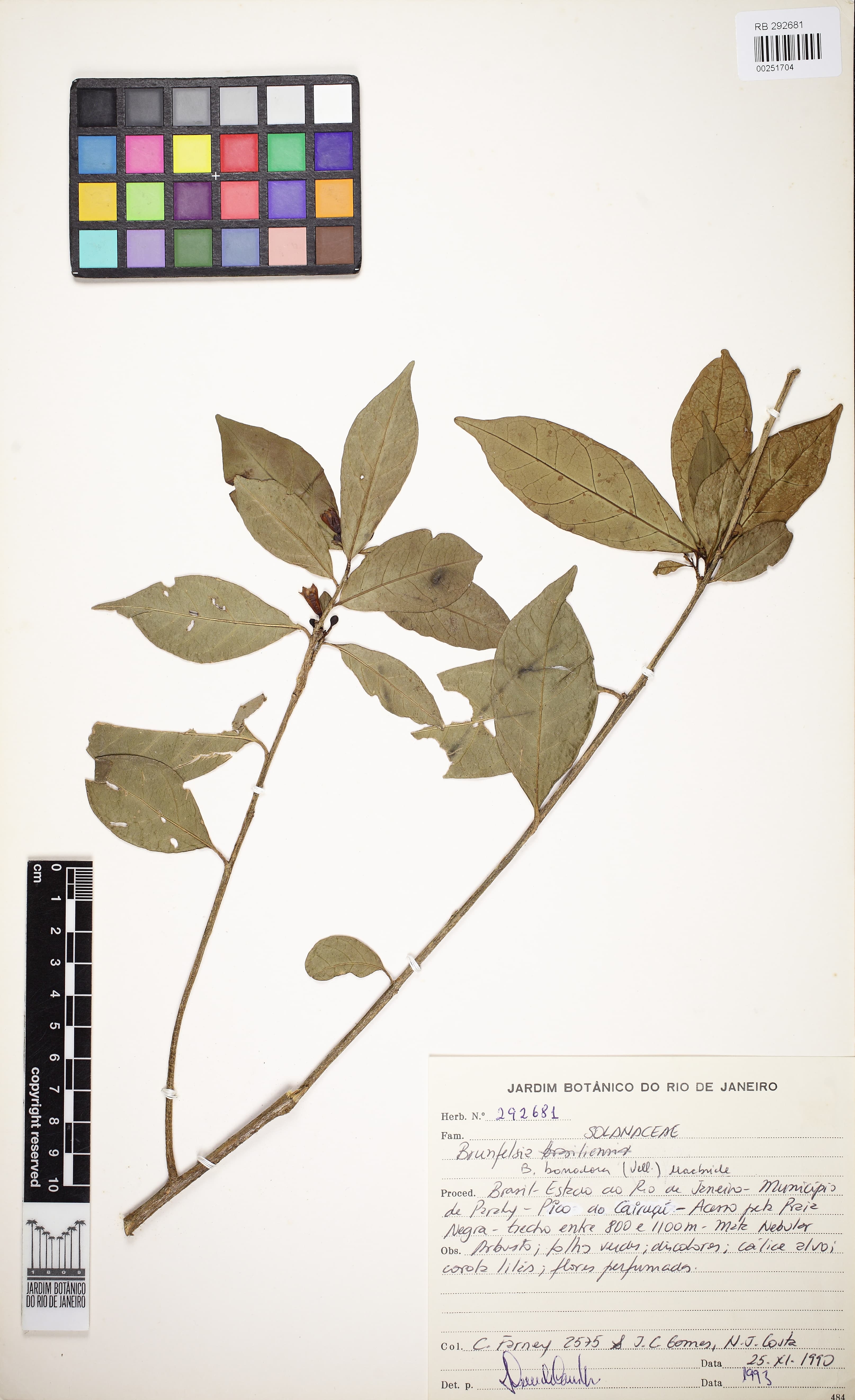
Brunfelsia bonodora
Image: C. Farney; J.C. Gomes & N.J. Costa (cc-by)
NameBrunfelsia bonodora
Scientific NameBrunfelsia bonodora (Vell.) J.F.Macbr.
Common NamesManacá, Yesterday-Today-and-Tomorrow
Plant FamilySolanaceae
Natural HabitatNative to the cloud forests of southeastern Brazil, specifically found in mountainous regions of Rio de Janeiro state at altitudes between 800 and 1100 meters.
Parts Usedroot,bark,leaf
Medicinal Actionsanalgesic, anti-inflammatory, diuretic
Traditional UsesTraditionally used in South American folk medicine as a purgative, diuretic, and for treating fevers, rheumatism, and syphilis. Due to its psychoactive properties, it has also been employed in shamanic rituals.
Active Constituentsbrunfelsamidine, manacine, scopoletin
Preparation Methodsdecoction, tincture, poultice
Contraindications & WarningsHighly toxic; contraindicated in pregnancy, lactation, children, and individuals with liver or kidney conditions. Avoid use with central nervous system depressants.
Cultivation NotesPrefers tropical to subtropical climates with moist, well-drained, acidic soil and partial shade. Requires consistent watering and protection from frost.
Rarityuncommon
Description
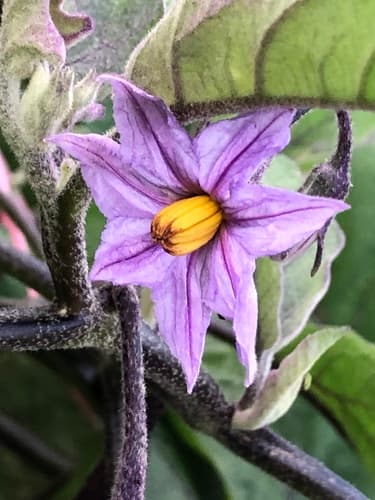
A shrub characterized by alternate, ovate-elliptic leaves. It produces fragrant flowers, typically with a white calyx and a lilac corolla, which are known to change color over several days.