Ipomoea tuberculata
NameIpomoea tuberculata
Scientific NameIpomoea tuberculata
Common NamesTuberculate Morning Glory, Yellow Morning Glory
Plant FamilyConvolvulaceae
Natural HabitatThis vine is native to tropical and subtropical regions, thriving in disturbed areas, roadsides, forest edges, and coastal environments. It prefers warm climates and well-drained soils, often seen scrambling over other vegetation.
Parts Usedleaf,root
Medicinal Actionsanti-inflammatory, antimicrobial, antioxidant
Traditional UsesTraditionally, the roots of closely related Ipomoea species have been used as a purgative, while leaves were applied topically as a poultice for skin ailments. Decoctions of the plant have also been employed for fevers and headaches in some folk medicine systems.
Active ConstituentsFlavonoids, Triterpenoids, Phenolic compounds
Preparation Methodsinfusion, decoction, poultice, powder
Contraindications & WarningsDue to potential purgative effects and limited specific safety data, pregnant or breastfeeding individuals and those with gastrointestinal issues should avoid use. High doses or improper preparation, especially of roots, may lead to adverse effects.
Cultivation NotesThis plant is easily cultivated from seeds or cuttings and prefers full sun to partial shade with well-drained soil. It is a vigorous grower and can become invasive in suitable warm climates, requiring management to prevent overgrowth.
Raritycommon
Description
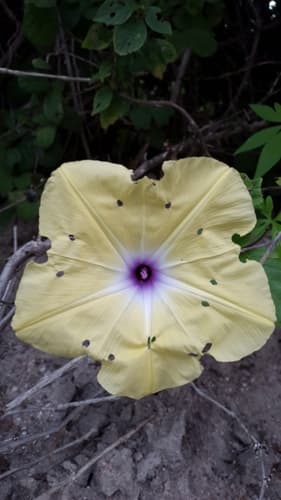
A vigorous perennial climbing vine characterized by large, pale yellow, funnel-shaped flowers with a striking purple throat. Its leaves are typically palmately lobed or deeply divided, and it produces round seed capsules.