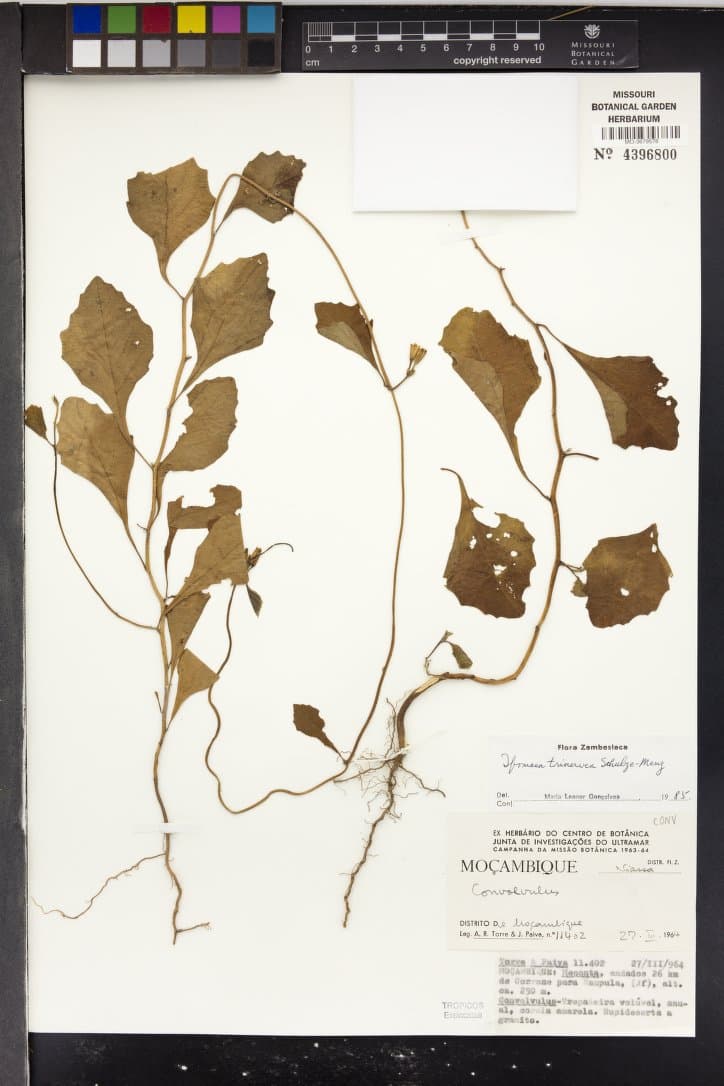
Ipomoea trinervia
Image: MBG (cc-by-nc)
NameIpomoea trinervia
Scientific NameIpomoea trinervia Schulze-Menz
Plant FamilyConvolvulaceae
Natural HabitatNative to tropical and subtropical regions of Southern Africa, particularly Mozambique and Zimbabwe. It thrives in grasslands, woodlands, and rocky areas, often found growing on granite outcrops at moderate altitudes.
Parts Usedleaf,root,flower
Medicinal Actionsanti-inflammatory, antimicrobial, antioxidant, nervine
Traditional UsesSpecific traditional medicinal uses for Ipomoea trinervia are not widely documented in ethnobotanical literature. However, within the broader Ipomoea genus, various species are traditionally employed as purgatives, for treating skin conditions, or for their psychoactive properties, often involving the roots or leaves.
Active Constituentsresin glycosides, ergoline alkaloids
Preparation Methodsinfusion, decoction, powder, poultice
Contraindications & WarningsSpecific contraindications for Ipomoea trinervia are not well-documented. However, other Ipomoea species can be potent purgatives and may cause gastrointestinal distress, dehydration, or interact with medications. Use during pregnancy or lactation is generally advised against for species with purgative or psychoactive properties.
Cultivation NotesIpomoea trinervia prefers warm climates, full sun to partial shade, and well-drained soil, especially in rocky or sandy conditions. It can be propagated from seeds or cuttings and may require support for its climbing habit.
Rarityuncommon
Description
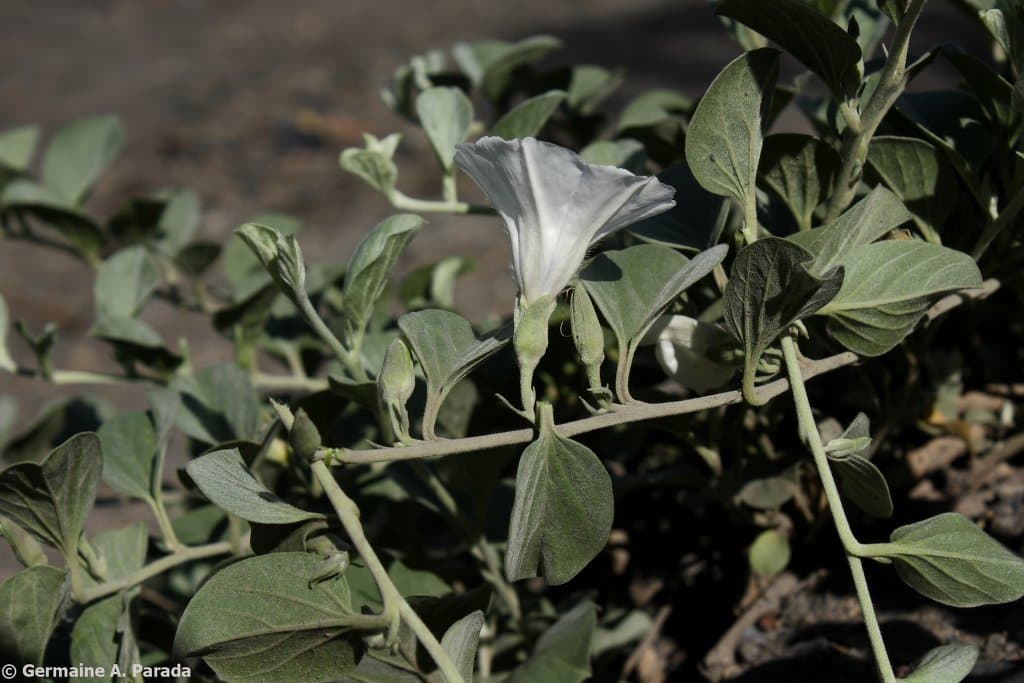
Ipomoea trinervia is a herbaceous perennial vine or creeper, characterized by its slender, twining stems and ovate to cordate leaves with prominent venation. It produces small, funnel-shaped flowers, typical of the morning glory family, and develops a fibrous root system.