Inkberry
NameInkberry
Scientific NameCestrum nocturnum
Common NamesNight-blooming Jasmine, Night-scented Jessamine, Lady of the Night, Dama de Noche, Raat Ki Rani, Inkberry (less common for this species)
Plant FamilySolanaceae
Natural HabitatNative to the West Indies and Central and South America, thriving in tropical and subtropical climates. It is often found in disturbed areas, forest edges, and widely cultivated as an ornamental.
Parts Usedleaf,flower,fruit
Medicinal Actionsnervine, sedative
Traditional UsesTraditionally, the strong fragrance of the flowers has been used in aromatherapy for its perceived nervine and sedative effects, aiding relaxation and sleep. In some folk medicine, leaves have been used externally as a poultice for swellings or skin conditions, though internal use is highly discouraged due to toxicity.
Active ConstituentsAlkaloids (e.g., solasonine, solamargine), Saponins, Volatile compounds (e.g., benzyl acetate, phenethyl alcohol)
Preparation Methodsessential oil, poultice
Contraindications & WarningsALL PARTS OF Cestrum nocturnum ARE POISONOUS IF INGESTED, causing severe gastrointestinal upset, nausea, vomiting, dizziness, and potentially respiratory issues. Skin contact can cause dermatitis in sensitive individuals. The strong fragrance can trigger asthma or respiratory distress. Not for internal use. Avoid during pregnancy and breastfeeding.
Cultivation NotesPrefers full sun to partial shade and well-drained soil. It is drought-tolerant once established and requires warm temperatures, being sensitive to frost. Pruning after flowering helps maintain its shape and encourages bushier growth.
Raritycommon
Description
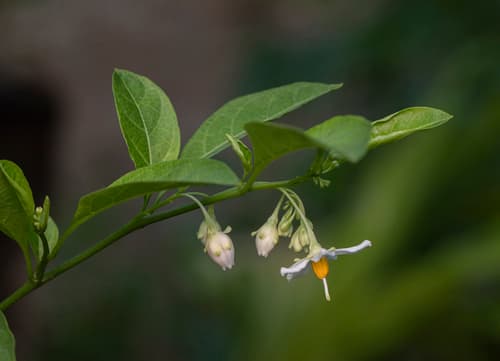
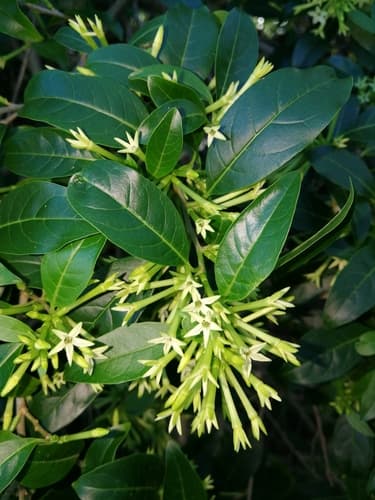
A fast-growing, evergreen shrub or small tree, characterized by its glossy, ovate to lanceolate leaves. It produces clusters of slender, tubular, pale yellowish-green to white flowers that are intensely fragrant, especially at night.