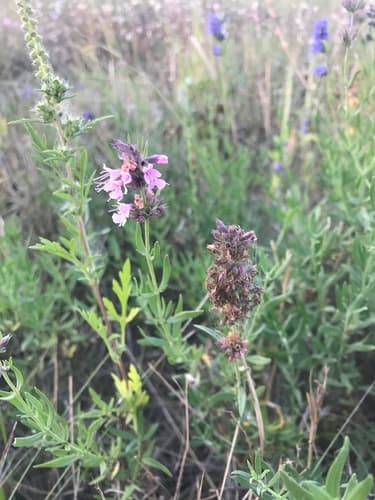
Hyssop
NameHyssop
Scientific NameHyssopus officinalis
Common NamesHyssop, Common Hyssop, Garden Hyssop
Plant FamilyLamiaceae
Natural HabitatNative to Southern Europe, the Middle East, and the Caspian Sea region, Hyssop thrives in dry, sunny, rocky, and calcareous soils. It is often found on hillsides, in garrigue, and along roadsides.
Parts Usedleaf,flower,whole_plant
Medicinal Actionsexpectorant, antimicrobial, anti-inflammatory, carminative, nervine, astringent
Traditional UsesTraditionally, Hyssop has been used to treat respiratory conditions such as coughs, colds, bronchitis, and asthma due to its expectorant properties. It has also been employed as a digestive aid, for minor skin irritations, and as a general tonic to stimulate circulation and digestion.
Active ConstituentsEssential oil (pinocamphone, isopinocamphone, alpha-pinene, beta-pinene, camphene, limonene), flavonoids, tannins, marrubiin
Preparation Methodsinfusion, decoction, tincture, essential oil, powder
Contraindications & WarningsHigh doses of hyssop essential oil can be neurotoxic and may induce seizures, particularly due to the presence of pinocamphone. It is not recommended for pregnant or breastfeeding women, individuals with epilepsy, or those with high blood pressure. Use with caution in children and always consult a healthcare professional.
Cultivation NotesHyssop prefers full sun exposure and well-drained, alkaline to neutral soil. It is drought-tolerant once established and can be grown from seed or cuttings. This hardy plant thrives in USDA zones 3-9.
Raritycommon
Description
Hyssop is an aromatic evergreen subshrub growing up to 60 cm tall, characterized by slender, erect stems, small linear leaves, and spikes of small, typically blue-purple (sometimes pink or white) flowers. It has a strong, minty, slightly bitter aroma and is often cultivated for its ornamental and medicinal properties.