Hyoscyamus senecionis
NameHyoscyamus senecionis
Scientific NameHyoscyamus senecionis
Common NamesDesert Henbane, Egyptian Henbane
Plant FamilySolanaceae
Natural HabitatNative to arid and semi-arid regions of North Africa and the Middle East, found in deserts, rocky slopes, wadis, and disturbed ground, preferring sandy or stony soils.
Parts Usedleaf,seed,whole_plant
Medicinal Actionsanalgesic, nervine, sedative
Traditional UsesTraditionally, Hyoscyamus senecionis has been used for its potent analgesic and sedative properties, particularly for relieving severe pain such as toothaches and rheumatic conditions. It was also employed as a hypnotic to induce sleep and calm spasms, though its use was always approached with extreme caution due to its high toxicity and psychoactive effects.
Active Constituentshyoscyamine, scopolamine, atropine
Preparation Methodstincture, powder, poultice
Contraindications & WarningsHighly toxic; not for internal use without expert medical supervision. Contraindicated in glaucoma, prostate enlargement, heart conditions, pregnancy, breastfeeding, children, and individuals with gastrointestinal obstruction. Can interact dangerously with other anticholinergic drugs, sedatives, and alcohol. Overdose can be fatal.
Cultivation NotesPrefers full sun and well-drained sandy or stony soil. Drought-tolerant once established. Propagated by seed. Requires minimal water and thrives in hot, dry conditions.
Rarityuncommon
Description
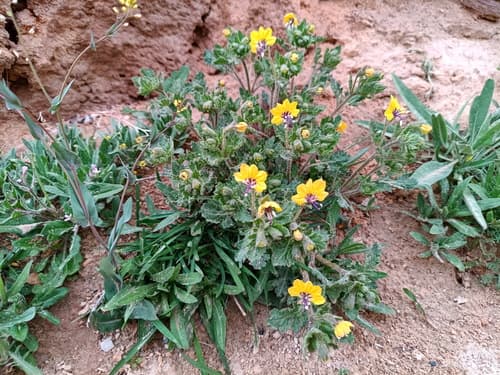
Hyoscyamus senecionis is a herbaceous plant characterized by its hairy, glandular, and often deeply lobed leaves. It produces distinctive yellow, funnel-shaped flowers with a dark purple or brownish throat, typically growing in arid and semi-arid environments. The plant can reach up to 60 cm in height, forming a bushy appearance.