Cuban Cattleheart
NameCuban Cattleheart
Scientific NameDuranta erecta
Common NamesGolden Dewdrop, Pigeon Berry, Skyflower, Duranta
Plant FamilyVerbenaceae
Natural HabitatNative to tropical and subtropical regions of the Americas, from Florida to Brazil and the West Indies. It thrives in coastal areas, disturbed sites, and open woodlands, preferring full sun to partial shade.
Parts Usedleaf,fruit,whole_plant
Medicinal Actionsanti-inflammatory, antimicrobial, diuretic
Traditional UsesTraditionally, the leaves have been used externally as a poultice for treating boils, abscesses, and various skin conditions. In some folk medicine, leaf extracts have been cautiously used as a diuretic or for fevers, though internal use is generally discouraged due to the plant's toxicity. The fruit is considered toxic to humans.
Active ConstituentsSaponins, Alkaloids, Flavonoids, Iridoid glycosides, Durantosides
Preparation Methodspoultice, decoction
Contraindications & WarningsAll parts of Duranta erecta, especially the berries, are highly toxic if ingested by humans and many animals, potentially causing nausea, vomiting, diarrhea, drowsiness, and convulsions. Skin contact with the sap may cause dermatitis in sensitive individuals. It should not be used internally, and is contraindicated for pregnant or breastfeeding women.
Cultivation NotesThis plant prefers full sun to partial shade and well-drained soil. It is drought-tolerant once established and can be heavily pruned to maintain its shape, making it suitable for hedges or ornamental shrubs in warm climates.
Raritycommon
Description
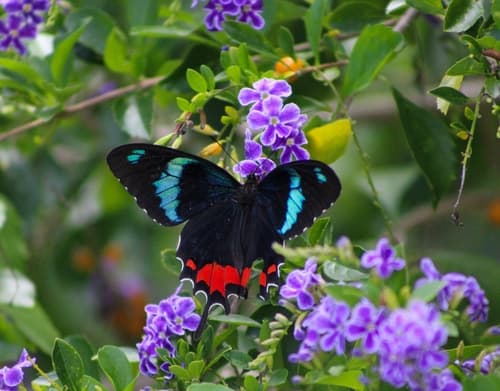
A fast-growing, sprawling shrub or small tree, often cultivated for its ornamental value. It produces delicate clusters of small, tubular, lavender-blue or white flowers, which are followed by drooping bunches of golden-orange berries. Its leaves are typically bright green and ovate.