Hydrangea mangshanensis
Image: Conveyor Belt (cc0)
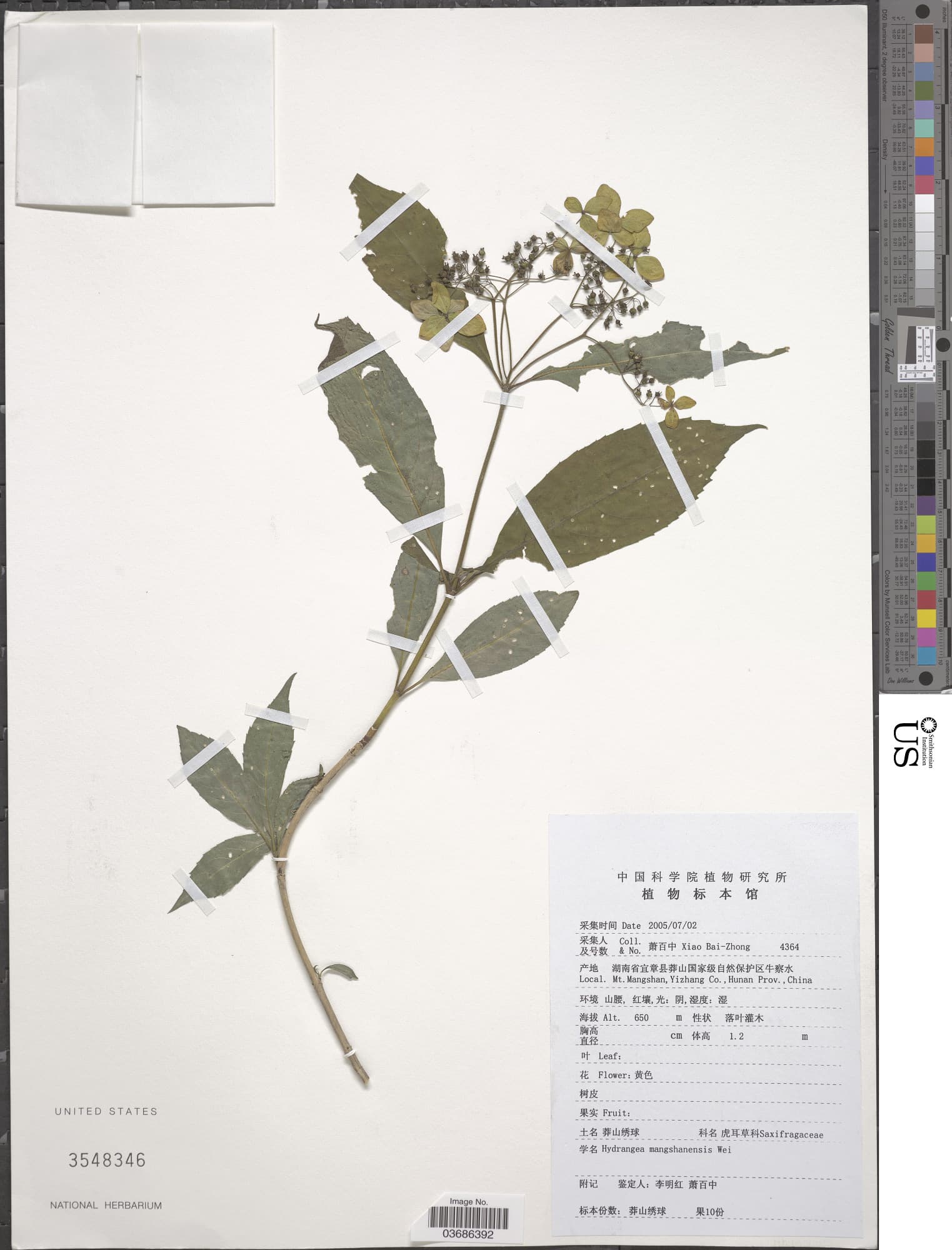
NameHydrangea mangshanensis
Scientific NameHydrangea mangshanensis C.F.Wei
Common NamesMangshan Hydrangea, 莽山绣球
Plant FamilyHydrangeaceae
Natural HabitatEndemic to Mangshan National Nature Reserve in Yizhang County, Hunan Province, China. It thrives on shaded, moist mountainsides with red soil, at altitudes around 650 meters.
Parts Usedroot,leaf,flower
Medicinal Actionsdiuretic, anti-inflammatory, antimicrobial
Traditional UsesTraditionally, species within the Hydrangea genus, including those found in China, are used in herbal medicine for treating urinary tract infections, kidney stones, and other urinary system disorders. It is also sometimes employed for rheumatic pain and as an anti-inflammatory.
Active Constituentshydrangin, hydrangenol, saponins, flavonoids, coumarins
Preparation Methodsdecoction, tincture, powder
Contraindications & WarningsPotential for gastrointestinal upset (nausea, vomiting, diarrhea) in high doses. Should be used with caution in individuals with kidney disease or those taking diuretics. Pregnant and breastfeeding women should avoid use.
Cultivation NotesPrefers shaded to partially shaded locations with consistently moist, well-drained, acidic red soil. Requires high humidity and protection from strong winds. It is a slow-growing species.
Rarityvery-rare
Description
A deciduous shrub, typically growing to 1.2 meters in height, characterized by its opposite, serrated leaves and terminal inflorescences. The flowers are small, often with larger sterile sepals, and appear in clusters.