Hydrangea involucrata
NameHydrangea involucrata
Scientific NameHydrangea involucrata
Common NamesBracted Hydrangea, Fringed Hydrangea, Japanese Hydrangea
Plant FamilyHydrangeaceae
Natural HabitatNative to Japan and Taiwan, it thrives in moist, shaded woodland environments, often found along stream banks or in forest understories.
Parts Usedroot
Medicinal Actionsdiuretic, anti-inflammatory, astringent
Traditional UsesWhile primarily ornamental, other species within the Hydrangea genus, particularly *H. arborescens*, have been traditionally used for their diuretic and lithotriptic properties. These uses include treating urinary tract infections, kidney stones, bladder issues, and prostate enlargement. *H. involucrata* shares some chemical constituents with these species, suggesting potential, though less documented, similar applications.
Active Constituentshydrangin, saponins, flavonoids, coumarins
Preparation Methodsdecoction, tincture
Contraindications & WarningsCaution is advised for pregnant or breastfeeding individuals, and those with kidney or heart conditions. May cause stomach upset in some individuals. Consult a healthcare professional before use.
Cultivation NotesPrefers partial to full shade and consistently moist, well-drained, acidic to neutral soil. Protect from strong winds and harsh afternoon sun. It is generally hardy and can be propagated by cuttings.
Raritycommon
Description
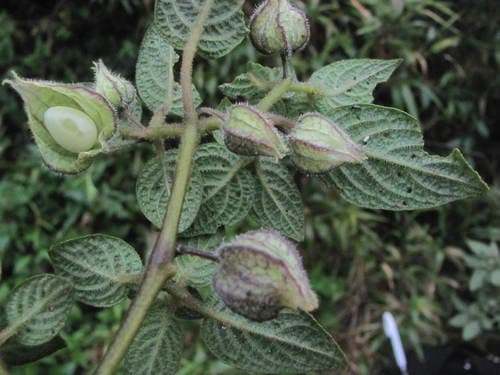
Hydrangea involucrata is a deciduous shrub known for its distinctive lacecap flowers, featuring a central cluster of small, fertile, purplish-blue florets surrounded by larger, sterile, white or pale-colored bract-like florets. Its leaves are typically broad, ovate, and often hairy, contributing to its ornamental appeal.