Horseradish
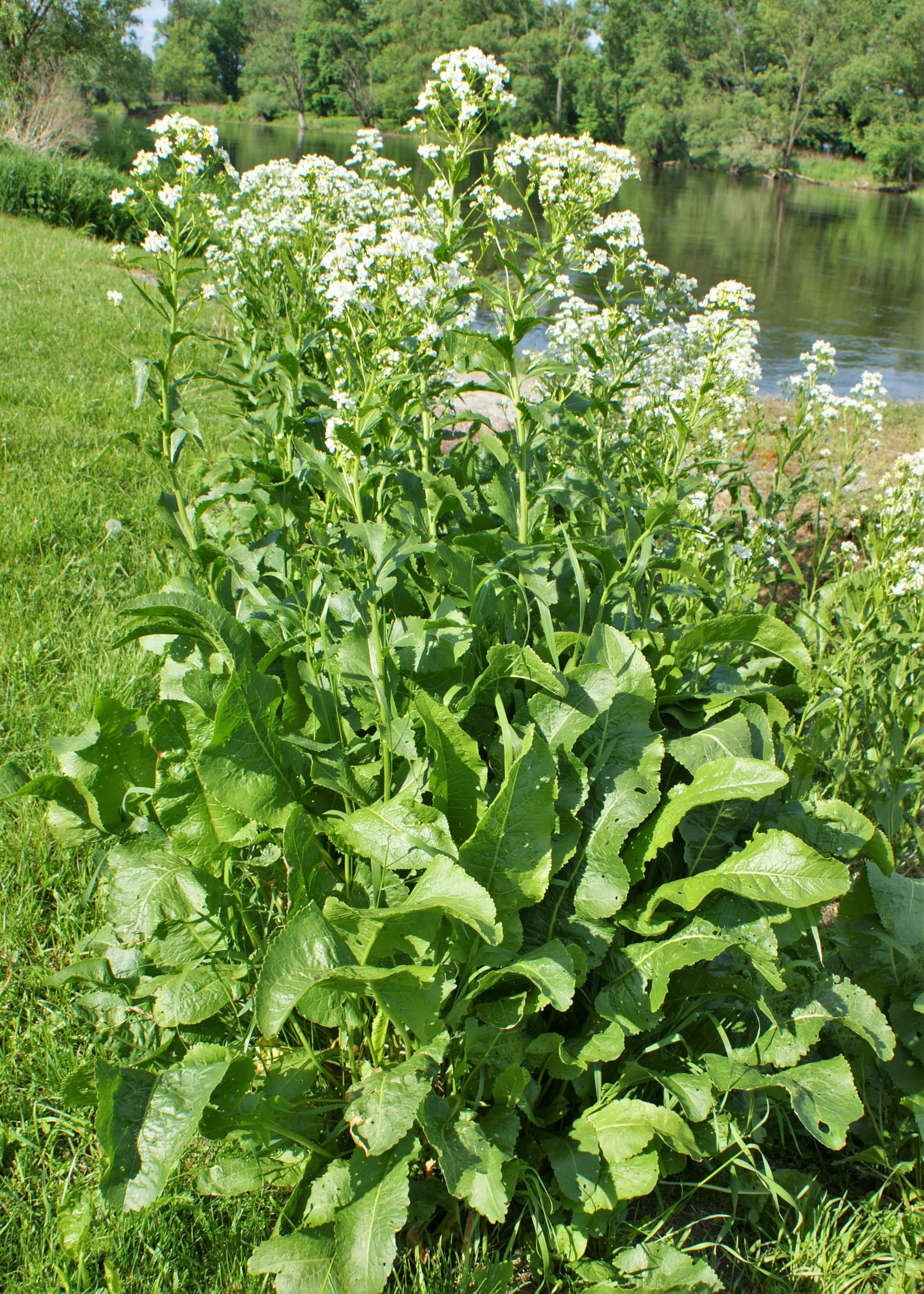
Image: Krzysztof Ziarnek, Kenraiz (CC BY-SA 4.0)
NameHorseradish
Scientific NameArmoracia rusticana
Common NamesHorseradish, Red Cole, Mountain Radish
Plant FamilyBrassicaceae
Natural HabitatNative to southeastern Europe and western Asia, it thrives in moist, fertile soils, often found in disturbed areas, riverbanks, roadsides, and cultivated gardens.
Parts Usedroot,leaf
Medicinal Actionsantimicrobial, diuretic, expectorant, anti-inflammatory, antioxidant
Traditional UsesTraditionally used to treat respiratory conditions like colds, coughs, and sinusitis due to its expectorant and decongestant properties. It has also been used as a digestive aid, a diuretic for urinary tract infections, and externally for muscle pain and inflammation.
Active ConstituentsSinigrin, Allyl isothiocyanate, Glucosinolates, Vitamin C
Preparation Methodsinfusion, tincture, poultice, powder
Contraindications & WarningsNot recommended for individuals with stomach ulcers, kidney disease, or thyroid disorders. High doses can cause stomach upset, sweating, and vomiting. Pregnant and breastfeeding women should avoid medicinal doses.
Cultivation NotesGrows best in full sun to partial shade and deep, moist, well-drained soil. It is a vigorous perennial that can become invasive if not contained, often propagated by root cuttings.
Raritycommon
Description
A robust perennial herb growing up to 1.5 meters tall, characterized by large, oblong, dark green basal leaves with crenate margins. It produces tall, branched flowering stems bearing numerous small, white, four-petaled flowers in terminal racemes.