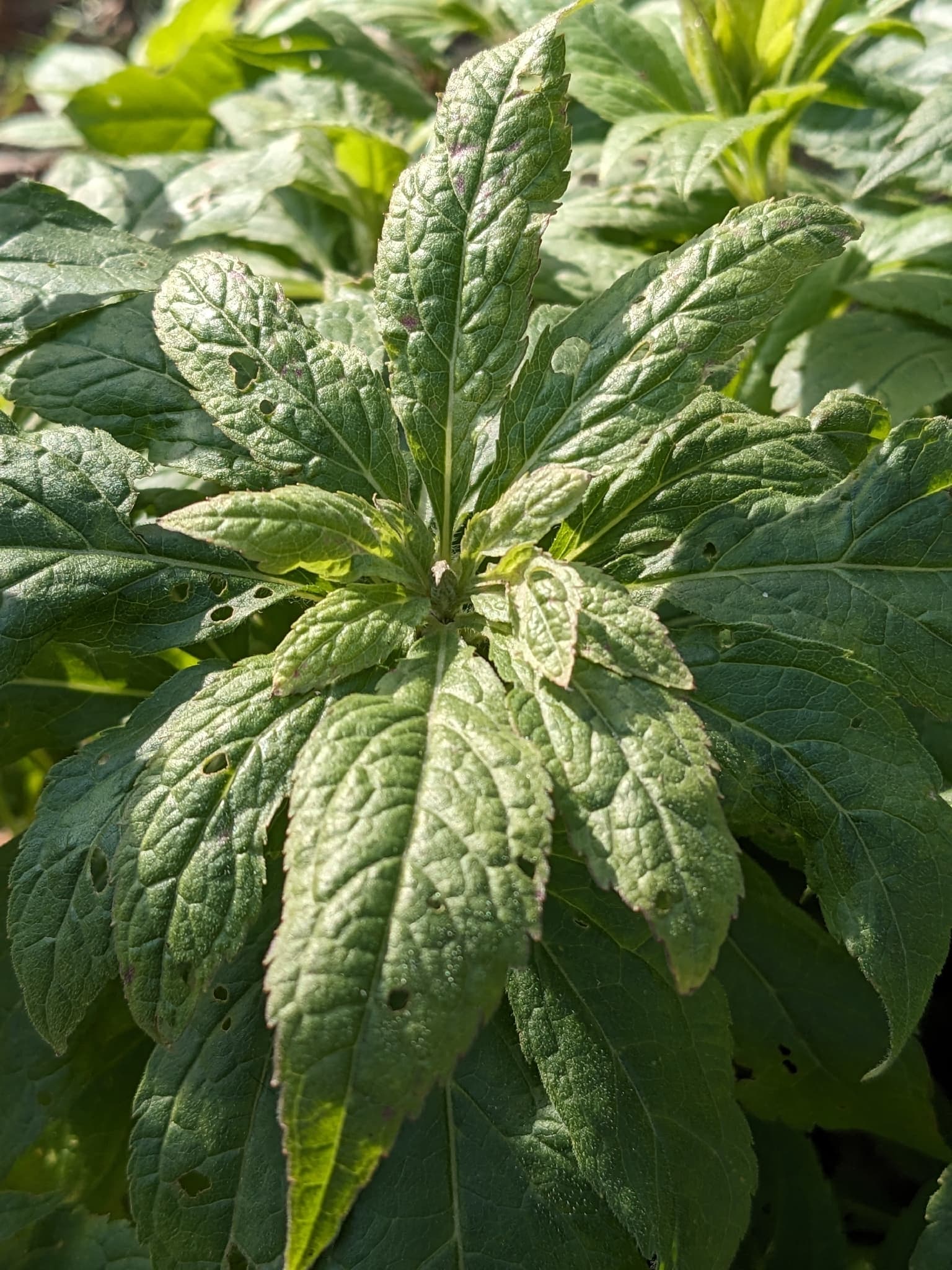
Hemp Agrimony
Image: vallespir (cc-by-nc)
NameHemp Agrimony
Scientific NameEupatorium cannabinum
Common NamesHemp Agrimony, Holy Rope, Water Hemp, Common Eupatorium
Plant FamilyAsteraceae
Natural HabitatIt thrives in damp, marshy areas, fens, ditches, riverbanks, and wet woodlands, often found in full sun to partial shade. It is native to Europe, parts of Asia, and North Africa.
Parts Usedleaf,flower,whole_plant
Medicinal Actionsdiuretic, anti-inflammatory, antimicrobial, antioxidant, expectorant
Traditional UsesTraditionally, Hemp Agrimony has been used as a diuretic, diaphoretic, and mild laxative. It was historically employed for fevers, colds, flu, and as a liver tonic, particularly for conditions involving congestion. Externally, it has been applied as a poultice for skin conditions and wounds.
Active ConstituentsSesquiterpene lactones, Flavonoids, Polysaccharides, Volatile oils, Tannins
Preparation Methodsinfusion, decoction, tincture, poultice, powder
Contraindications & WarningsInternal use of Hemp Agrimony should be approached with caution due to the potential presence of pyrrolizidine alkaloids (PAs), which can be hepatotoxic. It is not recommended for prolonged use, large doses, or for pregnant/breastfeeding women, or individuals with liver disease. Allergic reactions are possible, especially for those sensitive to the Asteraceae family.
Cultivation NotesHemp Agrimony prefers moist to wet soil and can grow in full sun to partial shade. It tolerates a range of soil types but thrives in rich, damp conditions. It propagates easily by seed or by division of its rhizomes.
Raritycommon
Description
Hemp Agrimony is a herbaceous perennial characterized by its erect stems and deeply divided, opposite leaves, often palmately lobed with 3-5 segments, resembling cannabis leaves. The leaves are coarsely toothed and somewhat hairy, and the plant produces clusters of small, pale pinkish-purple flowers in late summer.