Gila Morning Glory
NameGila Morning Glory
Scientific NameIpomoea barbatisepala
Common NamesGila Morning Glory, Bearded Sepal Morning Glory
Plant FamilyConvolvulaceae
Natural HabitatNative to the southwestern United States, this plant thrives in grasslands, rocky slopes, and open woodlands. It prefers well-drained soils and full sun, often found at moderate elevations.
Parts Usedseed,root
Medicinal Actionsantioxidant, diuretic
Traditional UsesSpecific traditional medicinal uses for *Ipomoea barbatisepala* are not widely documented in ethnobotanical literature. However, many species within the *Ipomoea* genus, particularly their roots and seeds, have been traditionally used by various indigenous groups as strong purgatives to induce bowel movements and for cleansing purposes. The plant may also possess general antioxidant properties common to many botanical species.
Active Constituentsresin glycosides, alkaloids
Preparation Methodsdecoction, powder
Contraindications & WarningsMany *Ipomoea* species, including their seeds and roots, are considered toxic or strongly purgative and can cause severe gastrointestinal upset, nausea, vomiting, and diarrhea if ingested. Due to potential toxicity and lack of specific safety data for *Ipomoea barbatisepala*, internal use is strongly discouraged. Pregnant or nursing women, children, and individuals with gastrointestinal disorders should avoid this plant.
Cultivation NotesGila Morning Glory prefers full sun exposure and well-drained soil. It is drought-tolerant once established and can be propagated from seed. As a perennial vine, it can be encouraged to climb or allowed to trail.
Raritycommon
Description
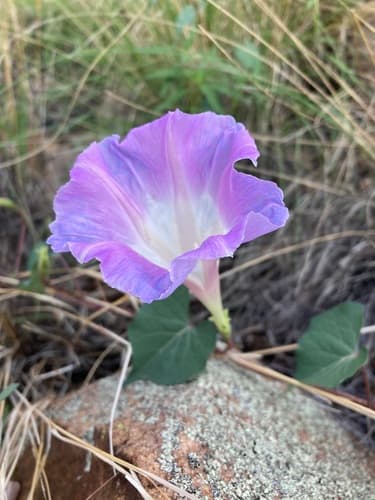
A perennial vine characterized by its heart-shaped leaves and showy, trumpet-shaped flowers. The blossoms are typically lavender to purple at the edges, fading to a lighter, often white, throat, blooming from summer into fall.