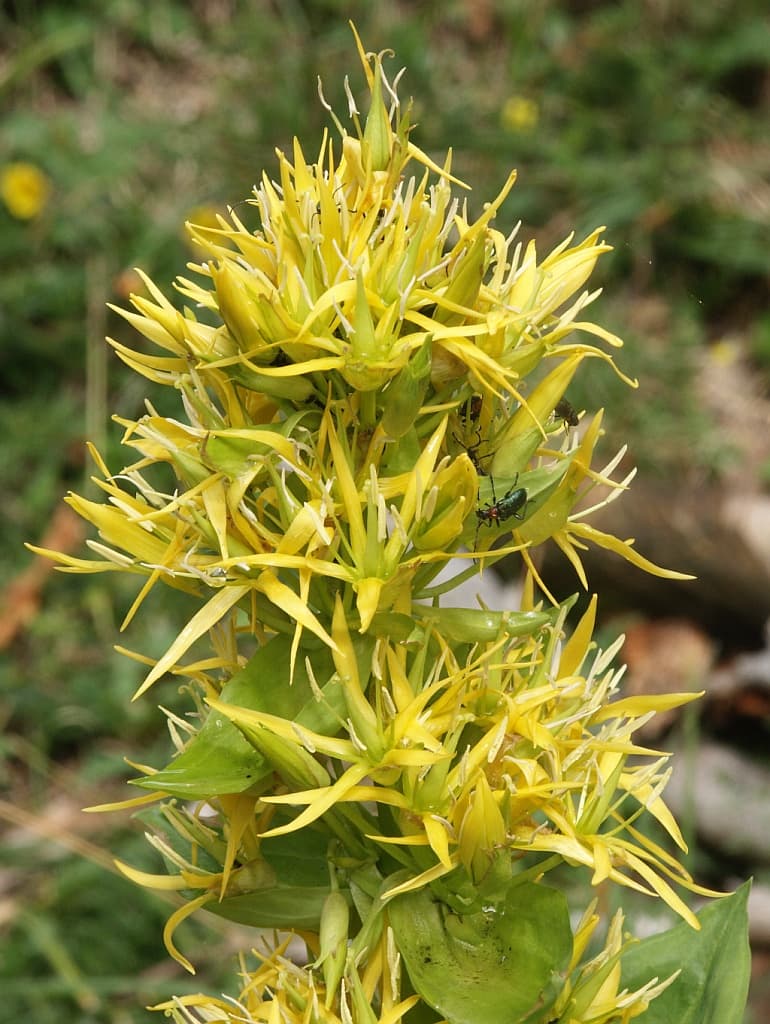
Gentian
Image: Bernd Haynold (CC BY-SA 2.5)
NameGentian
Scientific NameGentiana lutea
Common NamesGreat Yellow Gentian, Yellow Gentian, Bitter Root
Plant FamilyGentianaceae
Natural HabitatNative to the mountainous regions of central and southern Europe, it thrives in subalpine and alpine meadows, pastures, and open woodlands, often on calcareous soils.
Parts Usedroot
Medicinal Actionscarminative, anti-inflammatory, antimicrobial
Traditional UsesTraditionally used as a powerful bitter tonic to stimulate appetite and digestion, treat dyspepsia, and alleviate symptoms of indigestion and loss of appetite. It has also been historically employed for fevers and as a vermifuge.
Active ConstituentsGentiopicrin, Amarogentin, Xanthones, Alkaloids
Preparation Methodsinfusion, decoction, tincture, powder
Contraindications & WarningsContraindicated in cases of peptic ulcers, gastritis, and high blood pressure due to its ability to increase gastric acid secretion. It should also be avoided during pregnancy and breastfeeding.
Cultivation NotesThis slow-growing plant prefers well-drained, calcareous soils and full sun to partial shade in cool, mountainous climates. It can be propagated from seed, though germination is slow, or by root division.
Rarityuncommon
Description
Gentiana lutea is a striking perennial herb characterized by its tall stature, reaching up to 2 meters, and large, ribbed basal leaves. It produces whorls of bright yellow, star-shaped flowers with narrow petals in the axils of its upper leaves along the stem.