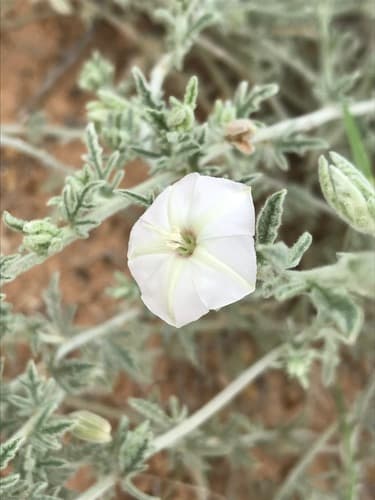
Convolvulus ocellatus
NameConvolvulus ocellatus
Scientific NameConvolvulus ocellatus
Common NamesSilver Bindweed, Silver Convolvulus
Plant FamilyConvolvulaceae
Natural HabitatNative to Southern Africa, it thrives in dry, sandy, or rocky soils, often found in grasslands, open woodlands, and disturbed areas, showing good drought tolerance.
Parts Usedwhole_plant,root
Medicinal Actionsantioxidant, anti-inflammatory
Traditional UsesSpecific traditional medicinal uses for Convolvulus ocellatus are not widely documented in available ethnobotanical literature. However, other species within the Convolvulus genus have historically been used as purgatives, for wound healing, and to address various skin conditions.
Active ConstituentsResin glycosides, Flavonoids, Phenolic compounds
Preparation Methodsinfusion, decoction, powder, poultice
Contraindications & WarningsDue to the lack of specific safety data for Convolvulus ocellatus and the known purgative properties of some Convolvulus species, internal use should be avoided, especially by pregnant or nursing women, young children, and individuals with gastrointestinal disorders. External use should be approached with caution.
Cultivation NotesThis drought-tolerant plant prefers full sun and well-drained, sandy or rocky soils. It can be propagated from seed or cuttings and is generally low-maintenance once established in suitable conditions.
Raritycommon
Description
Convolvulus ocellatus is a perennial herb characterized by its prostrate or scrambling growth habit and distinctive silvery-grey, densely hairy (tomentose) leaves. It produces solitary, funnel-shaped white flowers, often with a pale green throat, typical of the bindweed family.