Foxglove
NameFoxglove
Scientific NameDigitalis purpurea
Common NamesFoxglove, Purple Foxglove, Lady's Glove, Dead Man's Bells, Fairy Thimbles
Plant FamilyPlantaginaceae
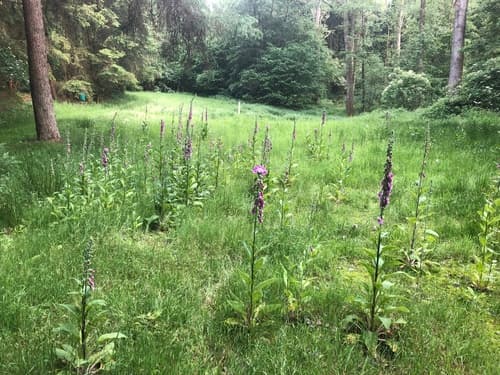
Natural HabitatIt thrives in woodlands, forest clearings, heaths, and disturbed ground, preferring acidic soils and partial shade. It is often found along roadsides and in open forest areas.
Parts Usedleaf
Medicinal Actionsdiuretic
Traditional UsesHistorically, foxglove was used to treat 'dropsy' (edema) and various heart conditions, particularly congestive heart failure, due to its profound effect on strengthening heart contractions and regulating rhythm. Its use was famously documented by William Withering in the late 18th century.
Active Constituentsdigitoxin, digoxin, other cardiac glycosides
Preparation Methodsinfusion, tincture, powder
Contraindications & WarningsEXTREMELY TOXIC. All parts of the foxglove plant are highly poisonous and can be fatal if ingested. It should NEVER be used for self-medication. Symptoms of poisoning include severe cardiac arrhythmias, nausea, vomiting, diarrhea, blurred vision, and confusion. It interacts dangerously with numerous medications, especially other cardiac drugs. Use only under strict medical supervision in pharmaceutical preparations.
Cultivation NotesFoxglove grows best in partial shade to full sun in well-drained, acidic to neutral soil. It is typically propagated by seed and is a biennial, meaning it flowers in its second year before dying back.
Raritycommon
Description
Foxglove is a biennial plant, forming a rosette of large, downy leaves in its first year. In its second year, it produces a tall, erect spike (1-2 meters) bearing numerous pendulous, thimble-shaped, purple (or sometimes white/pink) flowers, often spotted inside.