Solanum cajamarquense
Image: Conveyor Belt (cc0)
NameSolanum cajamarquense
Scientific NameSolanum cajamarquense Ochoa
Plant FamilySolanaceae
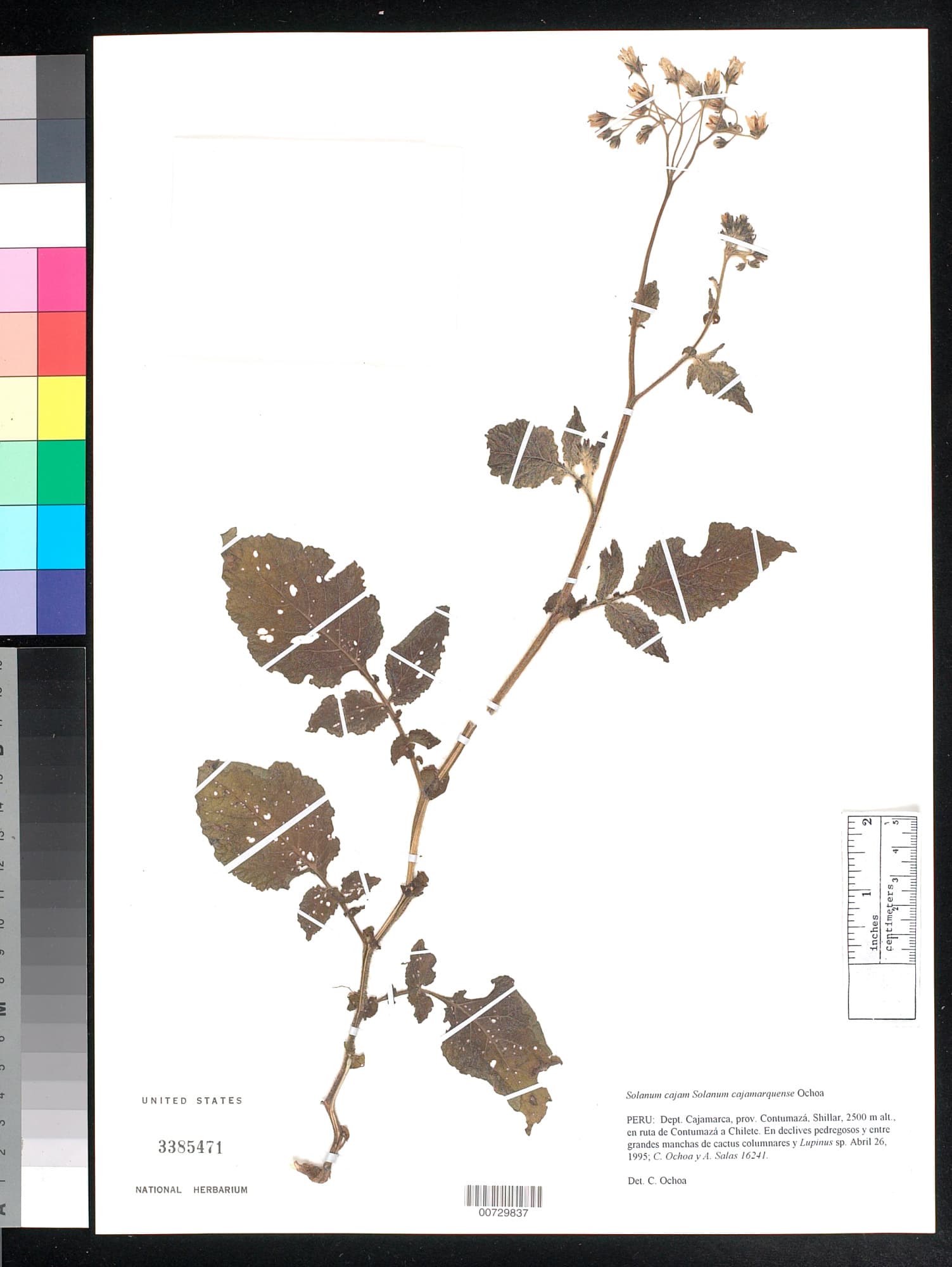
Natural HabitatNative to the high-altitude rocky slopes of Cajamarca, Peru, at approximately 2500 meters, often found growing among columnar cacti and Lupinus species.
Parts Usedleaf,flower
Medicinal Actionsanti-inflammatory, analgesic, antimicrobial
Traditional UsesSpecific traditional medicinal uses for Solanum cajamarquense are not well-documented in available literature. However, other Solanum species are traditionally used for their anti-inflammatory, analgesic, and antimicrobial properties, often applied externally for skin conditions, wounds, or pain relief, with extreme caution due to potential toxicity.
Active Constituentsglycoalkaloids, steroidal saponins
Preparation Methodspoultice, decoction
Contraindications & WarningsDue to the presence of potentially toxic glycoalkaloids common in the Solanum genus, internal use is strongly contraindicated without expert guidance. Symptoms of toxicity can include gastrointestinal distress, neurological effects, and cardiac issues. Avoid during pregnancy, lactation, and in children. May interact with medications affecting the nervous system.
Cultivation NotesThrives in well-drained, rocky soils at high altitudes, mimicking its native Andean habitat. Requires full sun exposure.
Rarityuncommon
Description
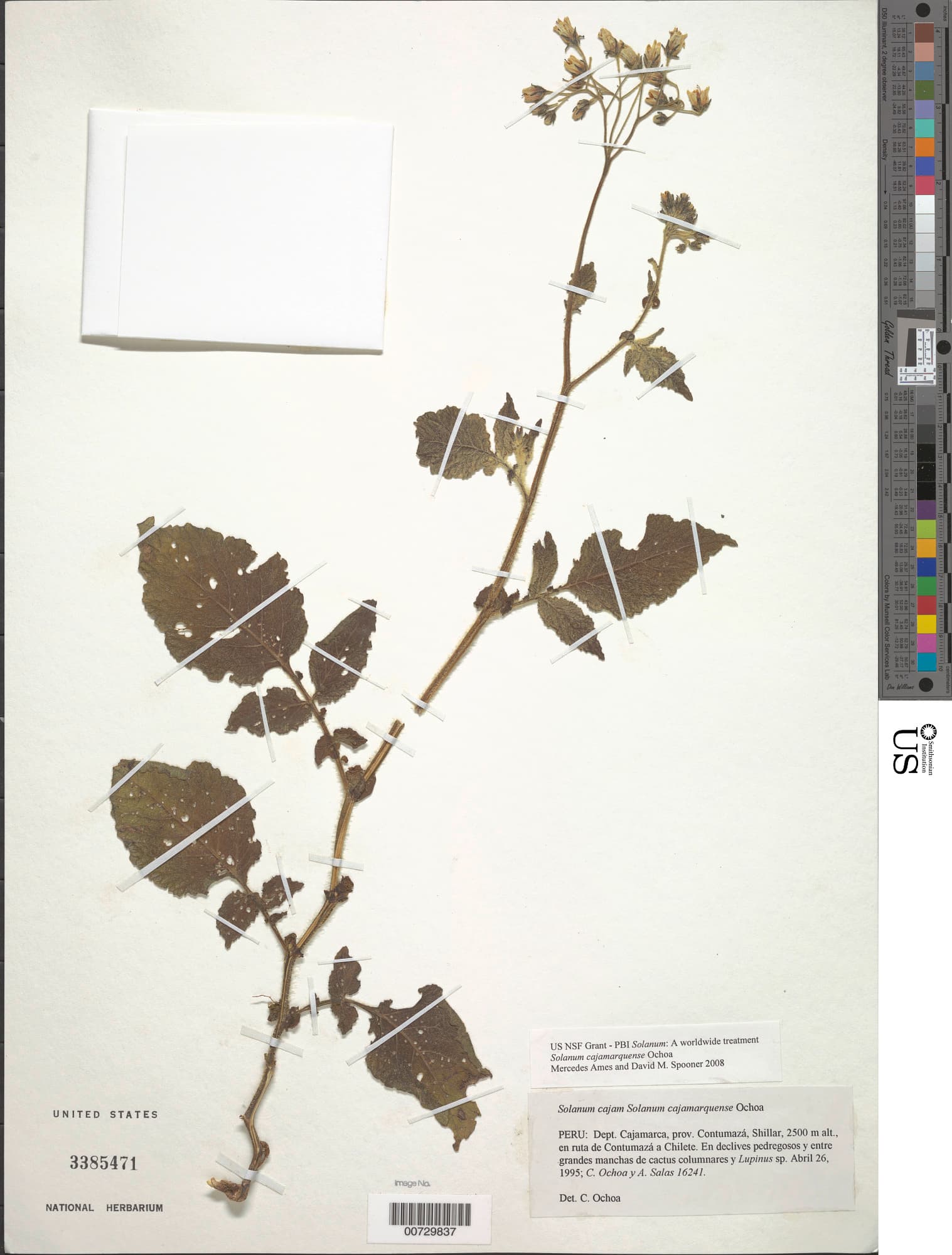
A herbaceous plant characterized by its pubescent stems and ovate, often lobed leaves. It produces small flowers arranged in cymes, typical of the Solanum genus. The specimen shows dried leaves, stems, and floral structures.