Foxglove
NameFoxglove
Scientific NameDigitalis purpurea
Common NamesFoxglove, Purple Foxglove, Lady's Glove, Dead Man's Bells
Plant FamilyPlantaginaceae
Natural HabitatNative to western and southwestern Europe, Foxglove thrives in acidic soils found in woodlands, forest clearings, heaths, and along roadsides. It prefers conditions ranging from partial shade to full sun.
Parts Usedleaf
Medicinal Actionsdiuretic
Traditional UsesHistorically, Foxglove leaves were used to treat 'dropsy' (edema) due to their diuretic properties, and later, famously, for congestive heart failure. Its active compounds, cardiac glycosides, were isolated and became the basis for modern heart medications like digoxin, used to strengthen heart contractions and regulate rhythm. CRITICAL WARNING: The entire plant is highly toxic and should never be used in self-medication due to its narrow therapeutic window and severe side effects, including fatal cardiac arrest.
Active ConstituentsDigitoxin, Digoxin, Gitoxin, Other cardiac glycosides
Preparation Methodspowder
Contraindications & WarningsEXTREMELY TOXIC. All parts of the Foxglove plant are poisonous if ingested, potentially causing severe nausea, vomiting, diarrhea, blurred vision, hallucinations, and fatal cardiac arrhythmias. It should never be used without strict medical supervision and precise dosage control, as the therapeutic dose is very close to the toxic dose. Significant interactions exist with other heart medications, diuretics, and conditions causing electrolyte imbalances. Pregnant or breastfeeding women, children, and individuals with pre-existing heart conditions should strictly avoid any contact or ingestion.
Cultivation NotesFoxglove grows best in well-drained, acidic to neutral soil in partial shade, though it can tolerate full sun in cooler climates. It is a biennial plant, forming a basal rosette of leaves in its first year and flowering in its second. It is easily propagated by seed and can readily self-seed in suitable conditions.
Raritycommon
Description
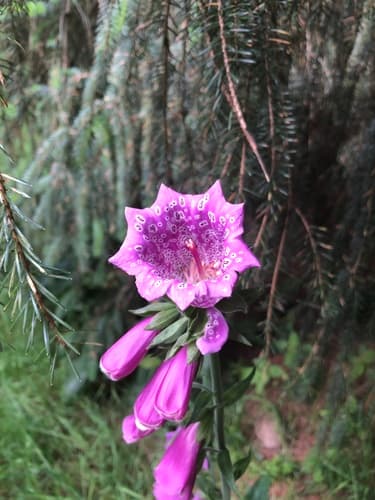
Digitalis purpurea is a biennial herbaceous plant characterized by its tall spires of bell-shaped, purple flowers, often adorned with distinctive spots inside. Its leaves are downy and form a basal rosette in the first year, with the impressive flowering stalk emerging in the second year.