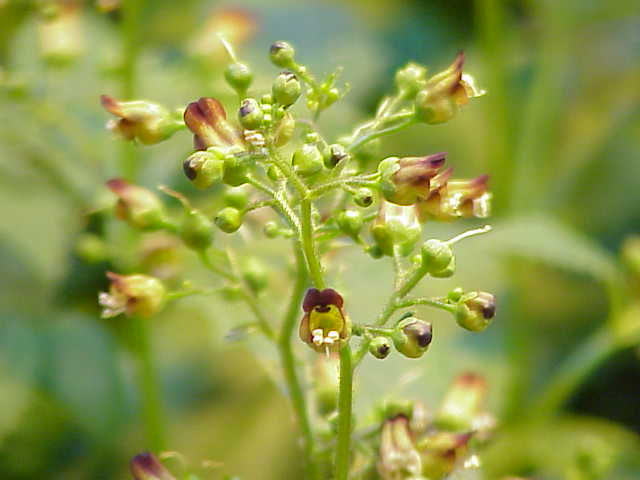
Figwort
Image: Kurt Stüber [1] (CC BY-SA 3.0)
NameFigwort
Scientific NameScrophularia nodosa
Common NamesCommon Figwort, Knotted Figwort, Woodland Figwort, Throatwort
Plant FamilyScrophulariaceae
Natural HabitatTypically found in damp, shady places such as woodlands, hedgerows, riverbanks, and ditches across Europe, Asia, and North America. It prefers moist, fertile soil.
Parts Usedleaf,flower,root
Medicinal Actionsanti-inflammatory, diuretic, antimicrobial, astringent
Traditional UsesTraditionally used for various skin conditions like eczema, psoriasis, scrofula, and wounds due to its anti-inflammatory and healing properties. It has also been used internally as a diuretic and mild laxative, and for lymphatic system support to aid detoxification.
Active ConstituentsIridoid glycosides, Flavonoids, Saponins, Phenolic acids
Preparation Methodsinfusion, decoction, tincture, poultice, salve
Contraindications & WarningsGenerally considered safe in moderate doses, but large doses can cause gastrointestinal upset. Should be avoided during pregnancy and breastfeeding due to lack of safety data. May interact with cardiac glycosides.
Cultivation NotesGrows best in moist, well-drained soil in partial shade to full sun. It is a hardy perennial that can self-seed readily. Propagated by seed or division.
Raritycommon
Description
Common Figwort is a herbaceous perennial plant characterized by its square stems and opposite, ovate, toothed leaves. It produces small, greenish-brown to purplish flowers with a distinctive two-lipped corolla, often appearing in loose terminal panicles. The plant can grow up to 1.5 meters tall.