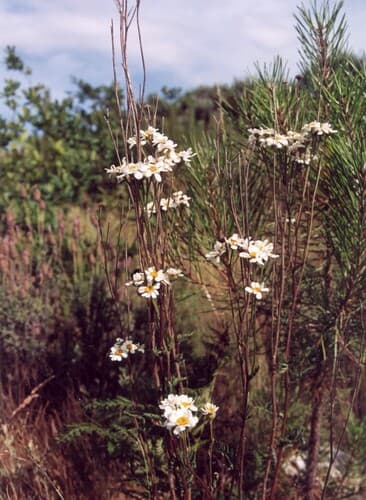
Feverfew
NameFeverfew
Scientific NameTanacetum parthenium
Common NamesFeverfew, Bachelor's Buttons, Featherfew, Wild Chamomile
Plant FamilyAsteraceae
Natural HabitatNative to the Balkan Peninsula, Feverfew is now widely naturalized across Europe, North America, and Australia. It commonly grows in disturbed soils, roadsides, waste ground, and gardens, preferring sunny locations.
Parts Usedleaf,flower,whole_plant
Medicinal Actionsanti-inflammatory, analgesic, antimicrobial, antioxidant
Traditional UsesTraditionally, Feverfew has been used for centuries to treat fevers, headaches (especially migraines), arthritis, and digestive issues. It was also employed as an emmenagogue to stimulate menstruation and to relieve insect bites and stings.
Active ConstituentsParthenolide, flavonoids, volatile oils
Preparation Methodsinfusion, tincture, powder
Contraindications & WarningsNot recommended for pregnant or breastfeeding women, individuals allergic to plants in the Asteraceae family (e.g., ragweed, chamomile), or those taking anticoagulant medications due to potential antiplatelet effects. May cause mouth sores or digestive upset in some individuals. Discontinue use gradually to avoid rebound headaches.
Cultivation NotesFeverfew is an easy-to-grow plant that can be propagated from seed or cuttings. It thrives in full sun to partial shade and prefers well-drained soil. Once established, it is drought-tolerant and can readily self-seed.
Raritycommon
Description
Feverfew is a herbaceous perennial plant characterized by its small, daisy-like flowers with white ray florets and yellow disc florets. It has aromatic, deeply lobed, light green leaves and typically grows to about 1-2 feet tall. The plant has a strong, bitter aroma when crushed.