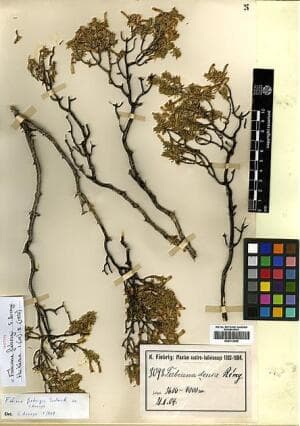
Fabiana fiebrigii
Image: Fiebrig, Karl August Gustav (cc0)
NameFabiana fiebrigii
Scientific NameFabiana fiebrigii Scolnik ex S.C.Arroyo
Plant FamilySolanaceae
Natural HabitatEndemic to the high-altitude puna and montane grasslands of the Andes in Bolivia and Argentina, typically found between 3600 and 4000 meters above sea level.
Parts Usedleaf,whole_plant
Medicinal Actionsdiuretic, anti-inflammatory, antimicrobial
Traditional UsesWhile specific traditional uses for Fabiana fiebrigii are not extensively documented, other Fabiana species, particularly F. imbricata, are traditionally used by indigenous communities in the Andes as a diuretic and for treating urinary tract infections, kidney stones, and bladder inflammation. It is likely F. fiebrigii shares similar local ethnomedicinal applications given its close relation and habitat.
Active ConstituentsFlavonoids, Coumarins, Phenolic acids
Preparation Methodsinfusion, decoction, tincture
Contraindications & WarningsDue to potential diuretic properties, caution is advised for individuals with kidney disease, heart conditions, or those taking other diuretics. Not recommended during pregnancy or lactation without professional advice.
Cultivation NotesRequires full sun, well-drained, sandy or rocky soil, and a cool, dry climate mimicking its high-altitude Andean habitat. It is drought-tolerant once established and can withstand cold temperatures.
Rarityuncommon
Description
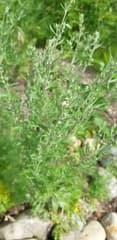
A xerophytic, woody shrub characterized by numerous slender, branched stems densely covered with small, imbricate, scale-like leaves, giving it a heath-like appearance. It is well-adapted to harsh, high-altitude environments.